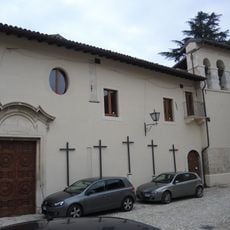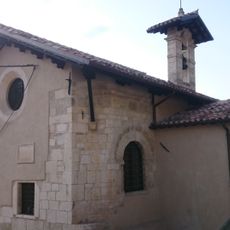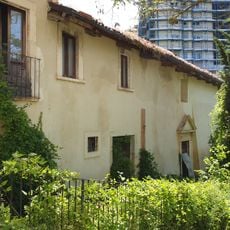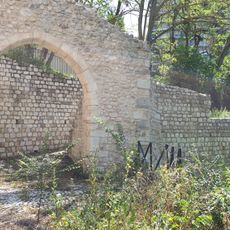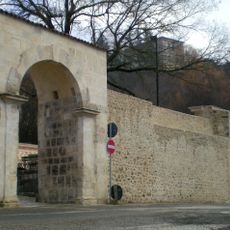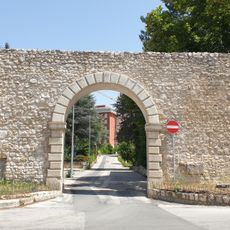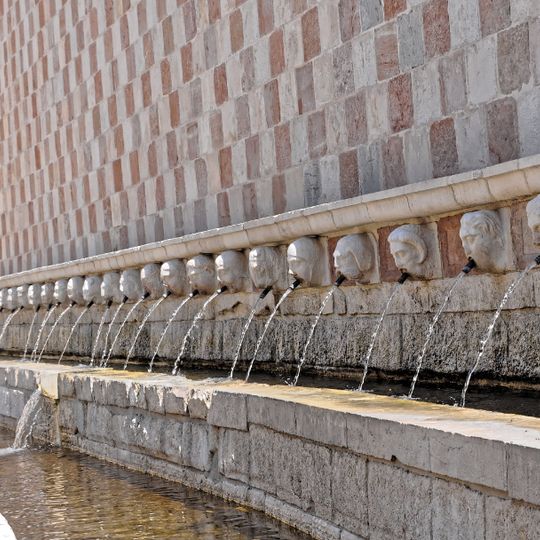
Fountain of the 99 Water Spouts, Gothic fountain in Quarto di San Giovanni, Italy.
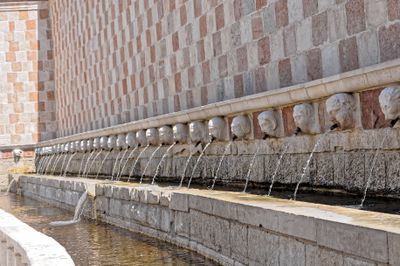
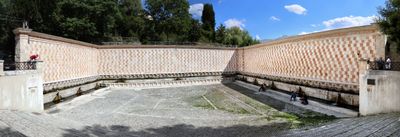
The travertine structure features three inward-facing pools and multiple rows of carved maskerons spouting water through stone channels.
Built in 1272 by architects Tancredi da Pentima and Girolamo Pico Fonticulano, the fountain commemorates the unification of neighboring villages into L'Aquila.
The 93 carved figures on the fountain spouts depict different faces of men, women, monks, knights, and mythical creatures of medieval times.
Located near L'Aquila train station, the fountain remains accessible throughout the year and continues to provide cold water to visitors.
A Templar cross marks the wall above the fountain, while the source of its continuously flowing cold water remains undiscovered after 700 years.
Location: L'Aquila
Inception: 1272
Architects: Tancredi da Pentima, Girolamo Pico Fonticulano
Architectural style: Gothic architecture
Made from material: travertine
Address: Piazza San Vito - 67100 L'Aquila AQ
GPS coordinates: 42.34961,13.38961
Latest update: May 27, 2025 11:37
Italian historic fountains demonstrate five centuries of craftsmanship in sculpture, hydraulic engineering, and urban design. From the 15th to the 19th century, Italian artisans shaped marble, bronze, and stone to create works combining practicality and artistic expression. These fountains tell stories from classical mythology, such as Neptune and marine deities, or from the Bible, like Moses drawing water from the rock. They also celebrate the political power of great families and the identity of Italian cities. In Rome, the Trevi Fountain extends 86 feet (26 meters) high with baroque sculptures, while Bernini's Fountain of the Four Rivers symbolizes continents on Piazza Navona. In Florence, Neptune sits above the Piazza della Signoria, recalling the Medici family's maritime ambitions. The gardens of Villa d'Este in Tivoli feature 51 fountains spread across multiple terraces, showcasing Renaissance hydraulic mastery. These works reveal how water has shaped Italy’s architecture and urban life, from papal Rome to squares in Palermo and Siena.
National Museum of Abruzzo
105 m
Basilica di San Giuseppe Artigiano
587 m
Convento di S. Domenico (L'Aquila, Italy)
494 m
San Vito
44 m
Chiesa dei Santi Marciano e Nicandro
434 m
Ex mattatoio
112 m
Beata Antonia
500 m
Palazzo Nardis
621 m
Palazzo Rivera
438 m
Palazzo Antonelli Dragonetti de Torres
512 m
Oratorio di Sant'Antonio dei Cavalieri de Nardis
575 m
Oratorio di San Giuseppe dei Minimi
593 m
Chiesa di San Paolo di Barete
569 m
Palazzo Pascali
581 m
Convento di Santa Chiara
145 m
San Pietro di Sassa
401 m
San Francesco di Paola
476 m
Palazzo Vastarini Cresi
588 m
Chiesa dell'Annunziata
617 m
Palazzo Antonelli
437 m
Palazzo Zuzi
570 m
San Giacomo della Rivera
169 m
San Bernardo
167 m
Madonna dei Sette Dolori
320 m
Chiesa di Santa Maria del Ponte
284 m
Sant'Apollonia
399 m
Palazzo Benedetti
592 m
Palazzo Rustici
453 mReviews
Visited this place? Tap the stars to rate it and share your experience / photos with the community! Try now! You can cancel it anytime.
Discover hidden gems everywhere you go!
From secret cafés to breathtaking viewpoints, skip the crowded tourist spots and find places that match your style. Our app makes it easy with voice search, smart filtering, route optimization, and insider tips from travelers worldwide. Download now for the complete mobile experience.

A unique approach to discovering new places❞
— Le Figaro
All the places worth exploring❞
— France Info
A tailor-made excursion in just a few clicks❞
— 20 Minutes