Tempio Voltiano, Science and technology museum in Como, Italy
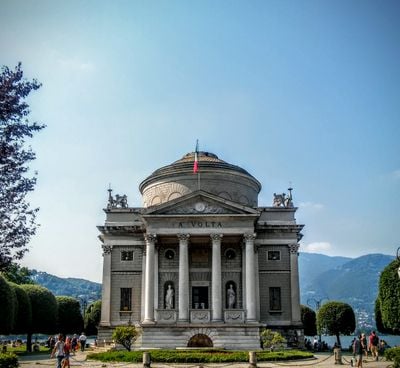
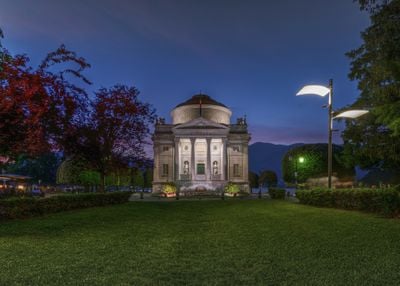
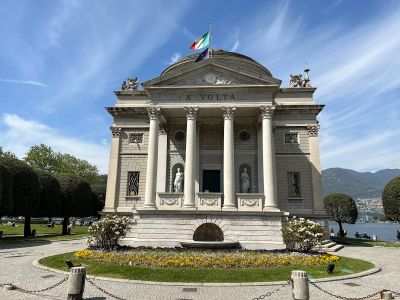
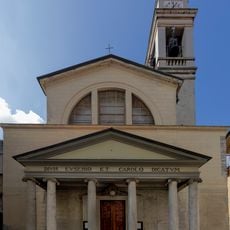
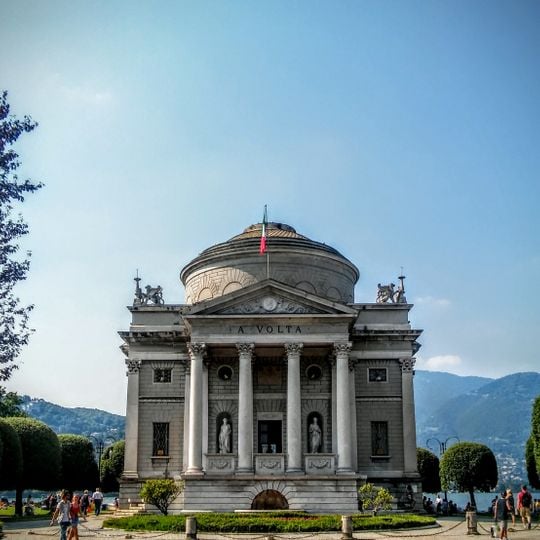
Tempio Voltiano is a neoclassical building in Como housing original scientific instruments and devices related to electrical discovery. The collection includes early battery models and experimental apparatus that show how this technology developed over time.
A fire at Como's 1899 Volta exhibition destroyed many of Volta's instruments, prompting calls for a permanent home for the survivors. Cotton industrialist and senator Francesco Somaini funded the building as a gift to the city, and architect Federico Frigerio designed it. Construction ran from 1925 to 1927, and the museum opened on 15 July 1928, a year after the centenary of Volta's death.
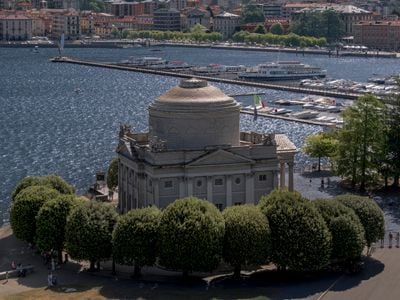
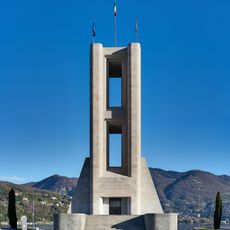
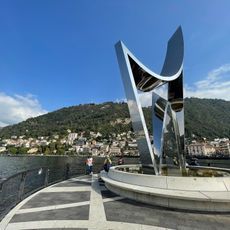
The building's profile appeared on the reverse of the 10,000 lire banknote, in circulation from 1984 until the euro replaced the lira in 2002; Volta's portrait was on the front. Near the museum stand two later Volta monuments: Daniel Libeskind's sculpture Life Electric (2015) on the breakwater and the Faro Voltiano at Brunate, built in 1927.
The museum stands at the end of Viale Guglielmo Marconi on the Lake Como shore, a short walk from Como's centre. Its raised base, over two metres high, was built to protect the exhibits from lake floods. The entrance is reached by a wide stairway up to the columned portico.
The building's profile appeared on the reverse of the 10,000 lire banknote, issued from 1984 until the lira was replaced by the euro in 2002; Volta's portrait was on the front. The same note is displayed inside among the commemorative materials.
The community of curious travelers
AroundUs brings together thousands of curated places, local tips, and hidden gems, enriched daily by 93,381 contributors worldwide.