Giovio Musaeum, Renaissance portrait museum in Como, Italy
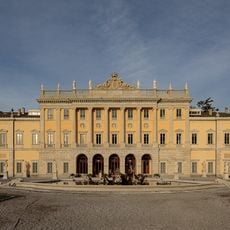
The Museo di Giovio a Borgovico was Paolo Giovio's villa-museum on the shore of Lake Como, on the site of today's Villa Gallia, built between autumn 1537 and spring 1543. It housed the Giovio Series, 484 portraits of writers, rulers, statesmen and dignitaries, arranged in four groups and each paired with a short biography. Demolished in 1615 after flood damage, it survives through copies: 39 originals are in Como's Pinacoteca Comunale, and Cristofano dell'Altissimo's copies line the First Corridor of the Uffizi.
Paolo Giovio founded this institution between 1537 and 1543, creating one of the earliest publicly accessible museums of its time. This effort was groundbreaking for the era and set a standard for preserving and presenting historical knowledge.
Giovio called his project a templum virtutis, a temple of virtue meant to edify the public. The portraits were grouped into four categories: living writers, dead writers, great artists, and dignitaries such as kings, popes and generals, then ordered by date of death or, for the living, by year of birth. Brief biographies, the Elogia, accompanied many of them.
The museum no longer exists: it stood on the shore of Lake Como at Borgovico, where Villa Gallia now stands, about a mile from Como. It was demolished in 1615 after flood damage, so the 484 portraits are seen elsewhere: 39 originals in Como's Pinacoteca Civica and the Medici copies in the Uffizi's First Corridor.
Each portrait in the collection includes an Elogia, a detailed biography that provides context about the life and achievements of the depicted person. These written companions make the collection more than just a gallery show and allow visitors to learn deeper stories about the people.
The community of curious travelers
AroundUs brings together thousands of curated places, local tips, and hidden gems, enriched daily by 93,147 contributors worldwide.