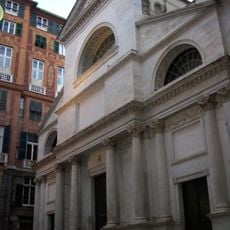
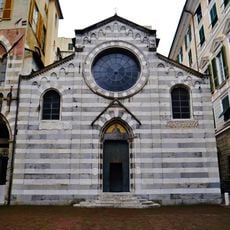
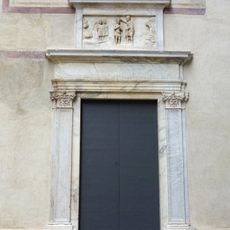
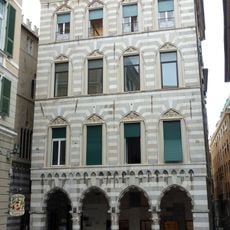
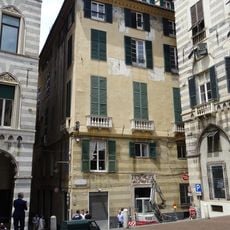
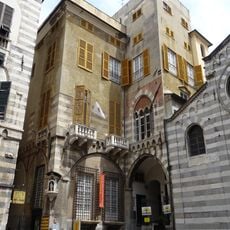
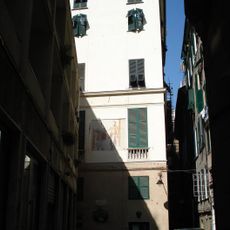
Palazzo Gio Vincenzo Imperiale, Renaissance palace in central Genoa, Italy.
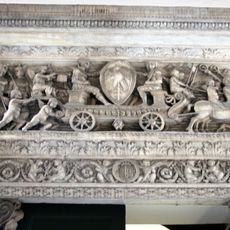
Palazzo Gio Vincenzo Imperiale is a Renaissance palace in central Genoa that combines the work of multiple architects. The interior rooms and facades display carefully crafted details and decorative elements typical of noble residences from this era.
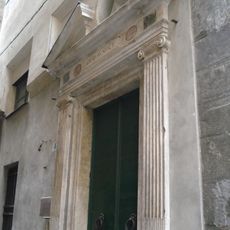
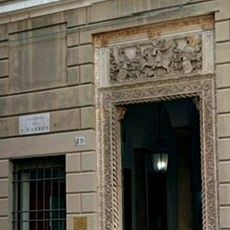
Built around 1560 for Vincenzo Imperiale, as inscribed on the main portal architrave, the palace was designed by Giovan Battista Castello, called il Bergamasco. His son Gio Giacomo, doge in 1617–1619, had Andrea Ansaldo enlarge it toward Soziglia and opened the via Imperiale (now Scurreria la Nuova) linking it to San Lorenzo. Listed in the Rolli from 1576 to 1664, it was damaged by naval bombardment in 1684 and by aerial bombing in 1942.
This palace is part of the Palazzi dei Rolli system, where noble families hosted important visitors based on their social standing. The practice reveals how Genoa organized its power structures through the rules of hospitality and housing.
The palace stands at piazza Campetto 4-8a, near the Soziglia market in Genoa's historic centre. A commercial business now occupies the entire ground floor, so the monumental staircase is reached through a secondary entrance to the right of the main portal. The first piano nobile, up the staircase, houses a bar-restaurant and an architecture studio.
On the second piano nobile, Luca Cambiaso and Giovanni Battista Castello painted episodes of the Story of Cleopatra on either side of a partition, a contest later described by Raffaele Soprani. The vault of the staircase carries Cambiaso frescoes of the Contesa tra Apollo e Amore and Apollo e Dafne, above marble busts.
The community of curious travelers
AroundUs brings together thousands of curated places, local tips, and hidden gems, enriched daily by 94,405 contributors worldwide.