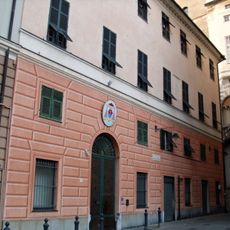
Diocesan museum of Genoa, Religious art museum in San Lorenzo Cathedral complex, Genoa, Italy
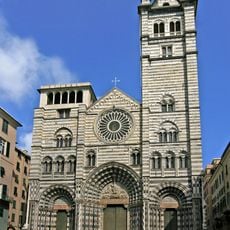
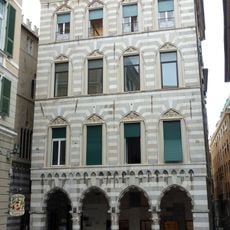
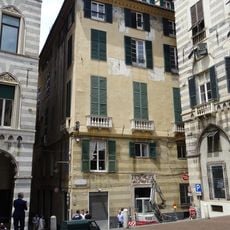
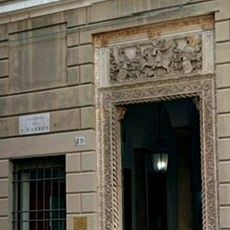
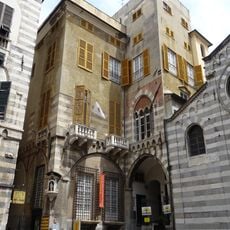
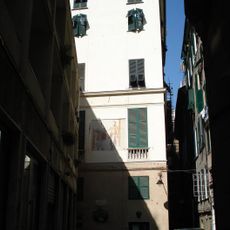
The Diocesan Museum of Genoa occupies the Palazzo dei Canonici, the canons' residence built between 1176 and 1184 and linked to San Lorenzo Cathedral by a suspended passage. Its two-level cloister has arches on paired Romanesque columns with water-leaf capitals; in the 17th century two sides replaced the twin columns with pilasters to carry two added floors. Inside are 13th-century wooden ceilings and 14th-century wall paintings.
The building was constructed between 1176 and 1184 on Roman foundations and long served as a residence for cathedral canons. In the 17th century it underwent significant modifications that changed its architectural appearance.
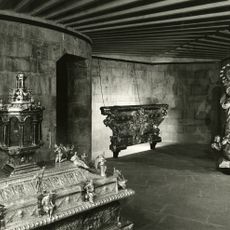
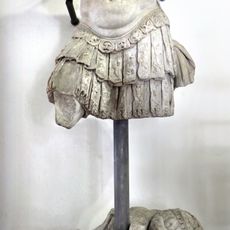
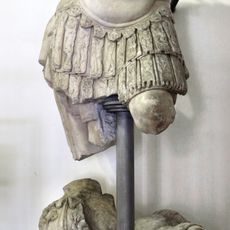
The display follows the history of the Genoese church: a bone comb and a Roman sarcophagus fragment from the 4th-6th centuries underground, then the funeral monument of Cardinal Luca Fieschi (c. 1336) from the school of Giovanni di Balduccio. A Flemish antependium embroidered with the Lamentation (c. 1515) and a silver reliquary of the hand of St Stephen, 12th century with 15th-century additions, show the liturgical commissions.
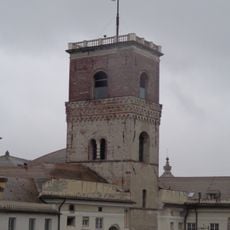
The museum is easy to find since it sits next to the cathedral and is reachable from the old town center. It helps to visit in early morning or late afternoon hours when fewer people are around.
The underground rooms hold the museum's oldest pieces: a bone comb from the 4th–6th centuries and a fragment of a Roman sarcophagus. Here too is the funeral monument of Cardinal Luca Fieschi, made around 1336 by the school of Giovanni di Balduccio of Pisa.
The community of curious travelers
AroundUs brings together thousands of curated places, local tips, and hidden gems, enriched daily by 94,379 contributors worldwide.