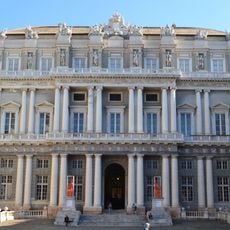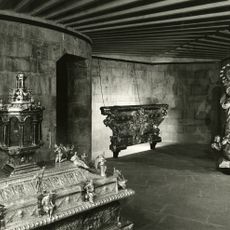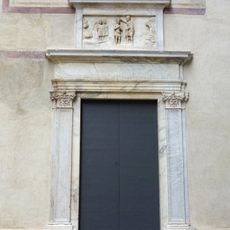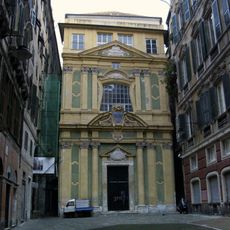
Genoa Cathedral, Roman Catholic cathedral in Genoa, Italy
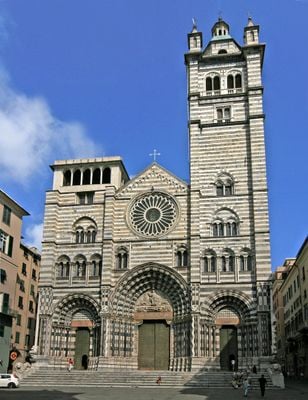
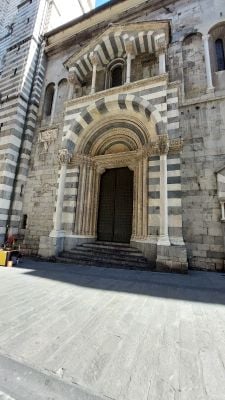
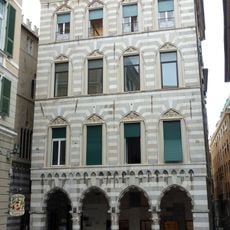
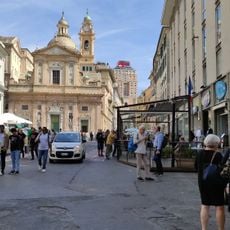
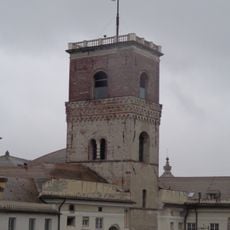
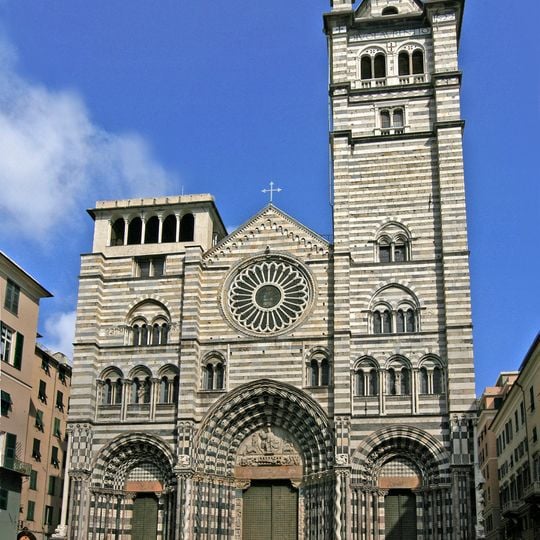
Genoa Cathedral is a Catholic place of worship in the historic center, recognizable by its horizontal bands of black and white marble across the front and three rounded entrance arches. The building combines Romanesque lower sections with Gothic additions above, and two towers of different heights stand on either side of the main entrance.
A church existed here by 878, and the episcopal seat moved to San Lorenzo in 1007. Reconstruction in Romanesque form began in 1098 with money from Crusade ventures, and Pope Gelasius II consecrated the building on 10 October 1118; in 1133 it became an archbishopric. A Gothic rebuilding begun around 1230 was interrupted by a fire in 1296, after which the facade was completed between 1307 and 1312.
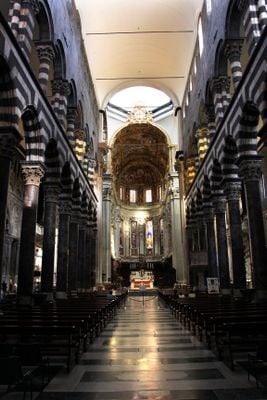
The left nave holds the Chapel of St John the Baptist, built to receive the ashes of Genoa's patron, brought back at the time of the First Crusade; the chapel contains sculpture by Domenico Gagini and works by Andrea Sansovino. The cathedral keeps the title of seat of the Archbishop of Genoa, granted in 1133. In the Treasury Museum below, the green glass Sacro Catino, taken at Caesarea, was long identified locally with the Holy Grail.
Access becomes limited during services, so visitors should check ceremony schedules before planning their visit. The treasury and museum have separate opening times and require an additional ticket, while the main nave remains free to enter.
An unexploded British bomb from a 1941 air raid sits in a glass case inside, a reminder of damage from the Second World War. The shell pierced the vault but did not detonate, and military personnel later made it safe.
The community of curious travelers
AroundUs brings together thousands of curated places, local tips, and hidden gems, enriched daily by 94,661 contributors worldwide.