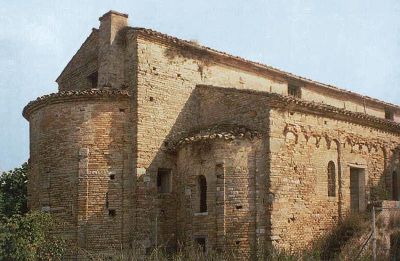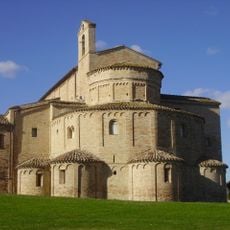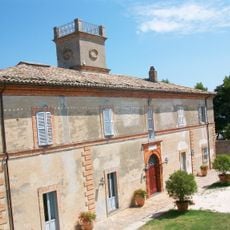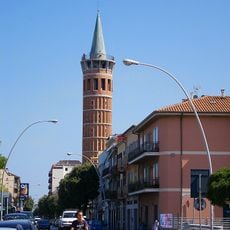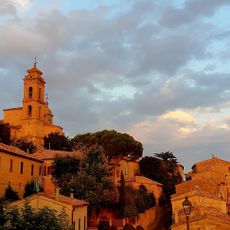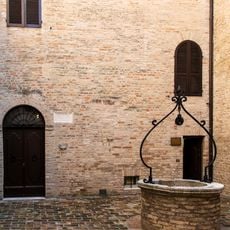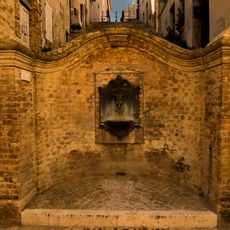
Abbazia di Santa Croce al Chienti, Romanesque abbey in Sant'Elpidio a Mare, Italy.
The Abbazia di Santa Croce al Chienti is a Romanesque church featuring three naves with the central one roughly twice as wide as the side naves. The layout follows the traditional basilica structure and displays characteristic features of Romanesque architecture from the medieval period.
The foundation act dates to 24 June 883, over a 5th-century Christian basilica; tradition places the consecration on 14 September 887, with Emperor Charles III the Fat, Bishop Theodosius of Fermo, 19 bishops and 27 canons. In 968 Otto I freed the Benedictine monastery from Fermo's bishop and took it under imperial protection. In 1239 Gregory IX had it reformed to the Cistercian order, and in 1266 it was annexed to Chiaravalle di Fiastra.
The name Santa Croce refers to the relic of the Holy Cross kept in a silver cross, the abbey's most prized reliquary in the 1263 inventory. Local tradition links the foundation to the legend of Lotario, a knight of Ascoli who, after the death of his beloved Imelda, became a hermit and devoted himself to building the basilica.
The building is located between the hamlets of Bivio Cascinare and Casette d'Ete and is now open to visitors after being carefully restored. The best time to visit is on quieter days when you can explore the structure and its architectural details without rushing.
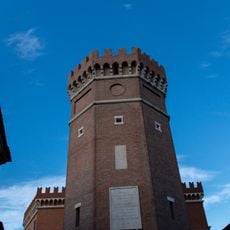
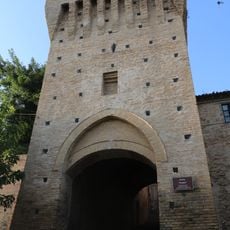
A 14th-century lunette on the Torre gerosolimitana in Sant'Elpidio a Mare, erected by the Knights of Malta, shows a falcon above three hills and serves as the abbey's coat of arms. The emblem is easy to miss because it stands in the town, not at the abbey itself.
The community of curious travelers
AroundUs brings together thousands of curated places, local tips, and hidden gems, enriched daily by 93,381 contributors worldwide.