Girdle of Thomas, Christian relic in Prato, Italy
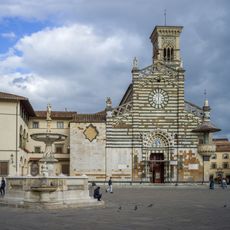
The Girdle of Thomas is a venerated cord kept in a silver reliquary within a dedicated chapel at Prato Cathedral. The textile has been preserved in this special chamber for centuries, where it remains as a focal point for pilgrims and visitors.
According to the legend, Thomas received the girdle at the Assumption and entrusted it to an Eastern-rite priest; it reached Prato in 1141 as the dowry of Maria, wife of the merchant Michele Dagomari, who had kept it in Jerusalem. In 1173 Dagomari revealed it on his deathbed, and the following year it was carried to the cathedral in procession. After the Pistoian canon Musciattino tried to steal it on 28 July 1312, the city took control and built the side chapel.
The relic's public display on 8 September, the Nativity of Mary, is accompanied by the Corteggio Storico, a historical procession through Prato. In the Middle Ages the showing coincided with the three days of the city's trading fair, with civic ceremonies and festivities. Since 1348 the Opera del Sacro Cingolo, a four-man lay body elected by the city council, has managed matters relating to the relic.
The relic is displayed five times each year, with the main exhibition on September 8 during the celebration of Mary's birthday. Visitors should check the cathedral's opening hours, as the chapel is accessible as part of the larger church.
In 1312 the canon Giovanni di ser Landetto da Pistoia, called "Musciattino", tried to steal the girdle for Pistoia but lost his way in fog and returned to Prato, shouting at the gates. He was condemned to lose his right hand and burned; a hand-shaped bloodstain is still shown on a marble block by the second door on the cathedral's right flank.
The community of curious travelers
AroundUs brings together thousands of curated places, local tips, and hidden gems, enriched daily by 93,073 contributors worldwide.