Saint Peter church, Church ruin in Altenburg, Italy
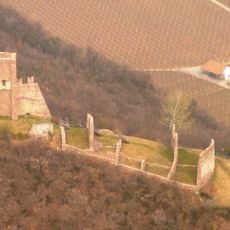
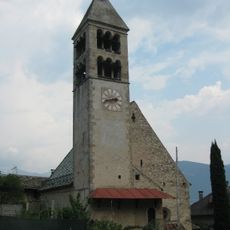
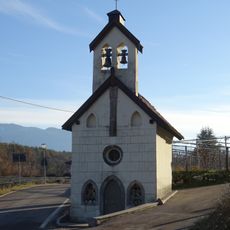
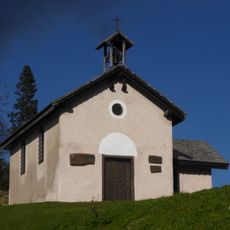
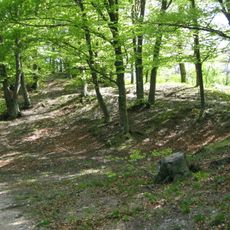
Saint Peter Church is a stone ruin located in the hills near Kaltern an der Weinstraße, showcasing typical architectural features of South Tyrolean religious buildings. The remaining structure reveals its simple, functional design with local construction methods.
St. Peter's origins reach back to the 6th century, making it one of the oldest churches in the southern Tyrol; its ground plan recalls early Christian models from Aquileia and Milan. The hill itself was settled in the Bronze Age, and the church is first documented in a 1191 copy of the Vigilius letter kept in the Kaltern parish archive. A monk named Nikolaus is recorded there in 1332. Emperor Joseph II's closure of the church in 1782 and the removal of its roof and wooden ceiling began the decay that left the ruin.
The church gave its name to the Altenburg estate and appears in a 1191 copy of the Vigilius letter kept in the Kaltern parish archive. Until 1786 processions from Kaltern still walked up to the site. A rock-cut hollow south of the ruin, 2.2 m long with a raised headrest, was long shown as the burial place of Saint Vigilius, who died in 405.
The ruin can be reached via marked walking paths from Kaltern an der Weinstraße through the surrounding hill country. Sturdy footwear is recommended since the terrain around the site is uneven and requires careful footing.
A 2.2 m long, 0.7 m wide carved depression in the rock lies 2.8 m outside the south wall, with a raised headrest at its north end. It has been read as an early burial place, a prehistoric offering site or a later baptismal font; in 1821 the church was even called the grave of St Vigilius, who died in 405 AD.
The community of curious travelers
AroundUs brings together thousands of curated places, local tips, and hidden gems, enriched daily by 94,050 contributors worldwide.