Basilica di San Quirino, Renaissance church in Correggio, Italy
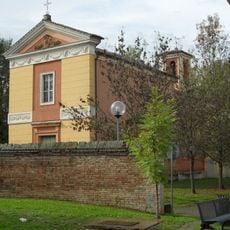
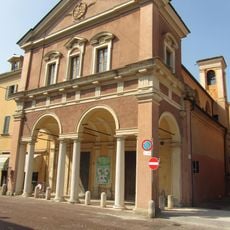
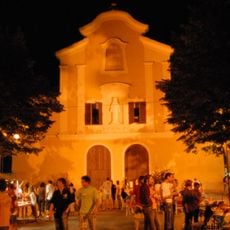
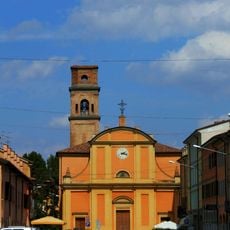
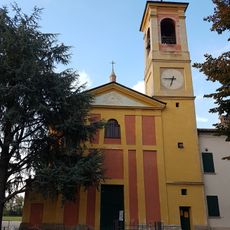
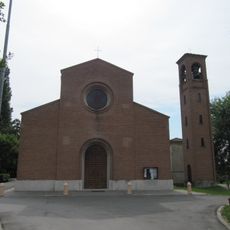
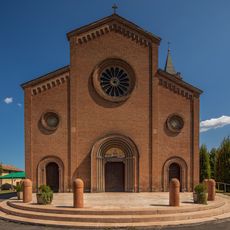
The Basilica di San Quirino is a Renaissance church with a basilical plan and three naves, completed in its structural parts in 1524 and consecrated in 1525. Its classical facade, finished in 1782, has exposed brick surfaces with marble capitals, cornices and bases, the result of a 1964 intervention by Carmela Adani. The civic tower stands on the right side of the facade, built in the mid-14th century and later adapted as the bell tower.
The church of Saints Michael and Quirinus is first documented in 1009 and stood infra castro Corigia by 1039. On 1 November 1508 Cardinal Francesco Alidosi, papal legate, established the collegiate chapter at the request of Count Giberto X Da Correggio. On 31 March 1512 the Da Correggio family granted the canons the Ortazzo area beside the old moats, and the new basilica was consecrated by Bishop Giovanni Maria Colonna on 5 October 1525; interior work ended in 1587.
The church is still the seat of the parish of San Quirino, and the canons' former role survives in the name of the adjoining civic tower, which served as the bell tower of the basilica from the early 16th century. The tower's bell chamber holds a ring of seven bells; the largest, cast in 1709 by Pietro Bosi of Parma, is known as the Campanone.
The basilica faces Piazza San Quirino, closing the eastern side of the old Castello square, today's Corso Cavour. The civic tower with its seven bells stands on the right of the facade, and traces of the ogive that once opened into the old town are visible at its base. Look for the dry-wall decorations in the ground-floor vault.
The civic tower beside the facade, built around the mid-14th century to defend Castelvecchio, was converted into the basilica's bell tower in the early 16th century. Its lower section still shows traces of the large ogival arch that formed the entrance to the old town, and dry-paint decorations from the last quarter of the 15th century re-emerged on the vault of the ground-floor room. The bell cell holds seven bells; the largest, the Campanone, was cast in 1709 by Pietro Bosi of Parma for the Community.
The community of curious travelers
AroundUs brings together thousands of curated places, local tips, and hidden gems, enriched daily by 94,692 contributors worldwide.