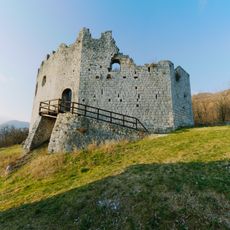
Castello di Maniago, Castle ruin on the slopes of Monte Jôf in Maniago, Italy
Castello di Maniago is a medieval fortification perched on a hilltop above the town, displaying the ruins of a central tower and several connected buildings arranged around an inner courtyard. The structures show how defensive and residential spaces were combined in a single complex.
The castle was built in the 12th century, after Emperor Otto II confirmed the donation of the Maniago fief to Patriarch Rodoaldo of Aquileia, whose distance from Aquileia made it hard to administer. The fief was divided among the Flagogna, Pinzano, Polcenigo and Varmo families as a "feudo di abitanza" in exchange for guarding it. On 15 December 1277 the Flagogna sold their share to Olvrando di Maniago, whose son Galvano bought out the remaining families by 1329. The castle was taken by Venice in June 1420 and abandoned by 1630.
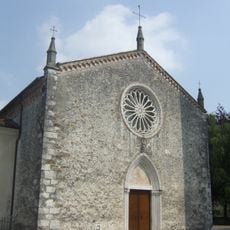
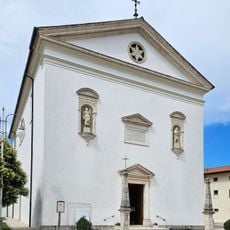
The castle's name comes from the Maniago family, who bought the Flagogna share on 15 December 1277 and gradually acquired the Pinzano and Varmo holdings. The small church of San Giacomo, still standing, joined the complex in 1355. The site is now overgrown, and the former borgo is covered by dense vegetation.
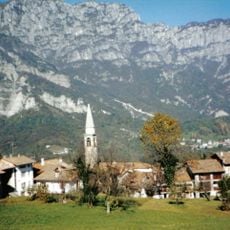
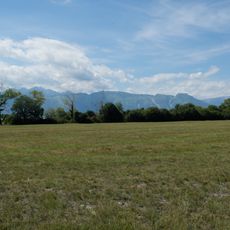
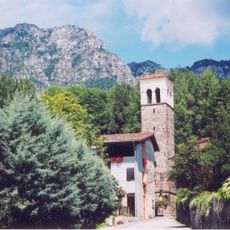
The ruins lie on the slopes of Monte Jôf above Maniago, not on a hilltop in the town centre. The site is reached on foot; the church of San Giacomo, part of the castle complex from 1355, still stands just outside the first wall circuit, while the borgo is now covered by dense vegetation. Sturdy footwear helps on the uneven ground.
The central tower, known as the Turris Magna, was built with such solid construction that parts of it survive to this day and remain the most visible element at the ruins. Its preservation gives visitors a clear sense of medieval building techniques.
The community of curious travelers
AroundUs brings together thousands of curated places, local tips, and hidden gems, enriched daily by 93,638 contributors worldwide.