Cencelle, Archaeological site in Tarquinia, Italy.
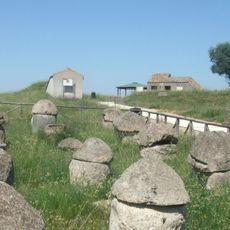
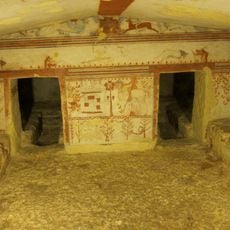
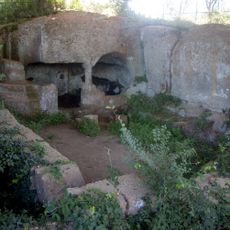
Cencelle is an archaeological site near Tarquinia containing the remains of a medieval settlement with residential structures, fortification walls, and multiple occupation layers. The excavations reveal how buildings were organized and positioned across the site, allowing visitors to understand the spatial layout of this historical community.
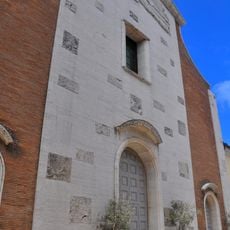
Pope Leo IV founded the city on 15 August 854, as recorded in the Liber Pontificalis, to give the people and diocese of Centumcellae (Civitavecchia) a safer seat against Saracen raids on the Tyrrhenian coast. He called it Leopoli, but early documents use Centumcellae, later Centucelle and Cencelle. The main church of San Pietro was rebuilt larger between the late 11th and early 12th century. Damaged by the 1349 earthquake, the town declined and by the early 15th century its lands were recorded as destroyed and uninhabited.
The name Leopoli, recorded by the pope's biographer, never took hold: documents of the first centuries call the town Centumcellae, later Centucelle, Cincelle and finally Cencelle. After worship ended, a bell furnace was installed in the left nave of San Pietro and agricultural processing equipment in the crypt.
The excavated sectors lie on a hill between the Mignone river and its tributary Melledra, reached from the Tarquinia area; the ground is uneven and the structures are open-air. Excavations by Sapienza University of Rome began in 1994 and continue under Giorgia Maria Annoscia, so some sectors may be fenced off during work.
Pope Leo IV named the new city Leopoli, yet the name never took hold: early documents call it Centumcellae, later Centucelle, Cincelle and finally Cencelle. The site was later linked to the alum mines of the Tolfa mountains in the second half of the 15th century.
The community of curious travelers
AroundUs brings together thousands of curated places, local tips, and hidden gems, enriched daily by 92,729 contributors worldwide.