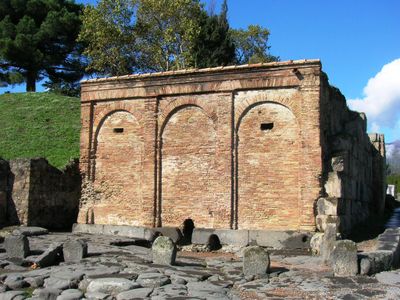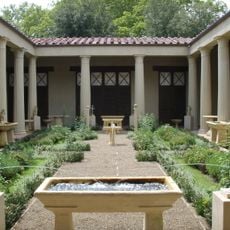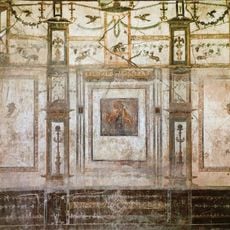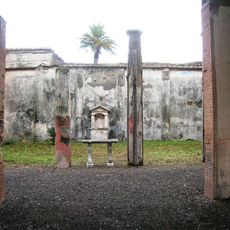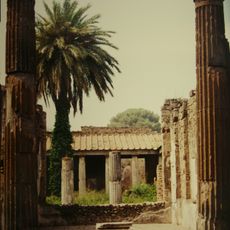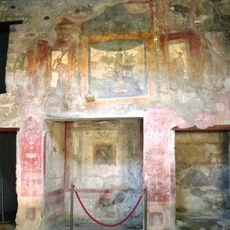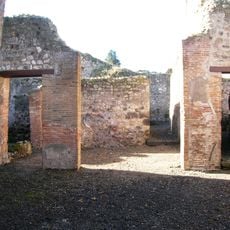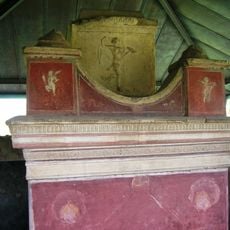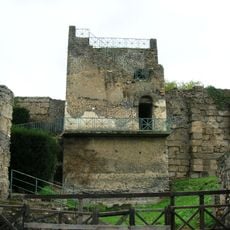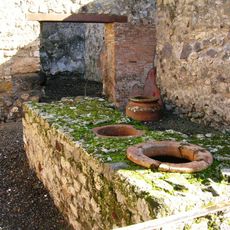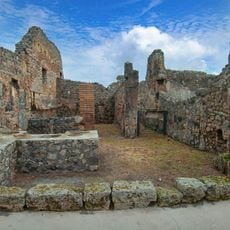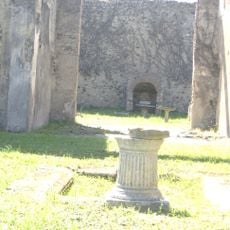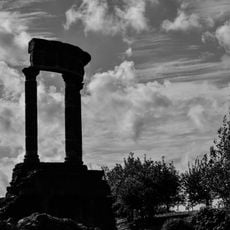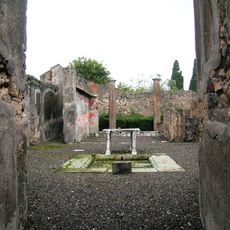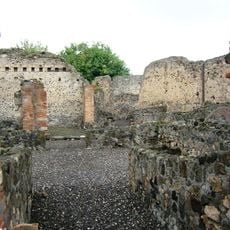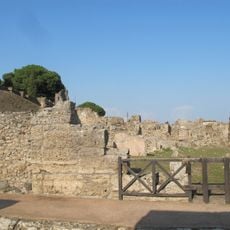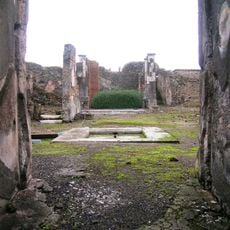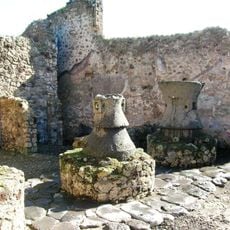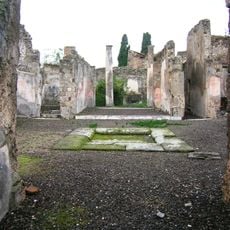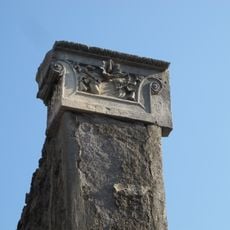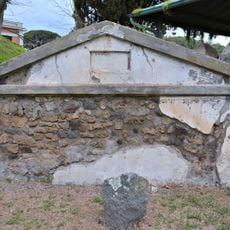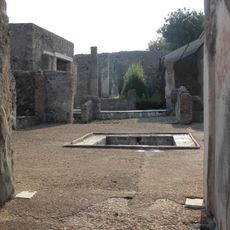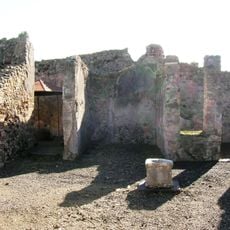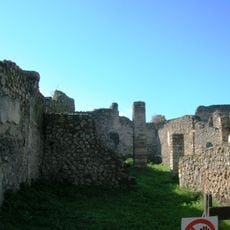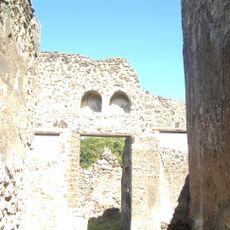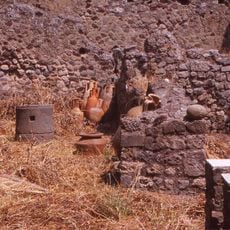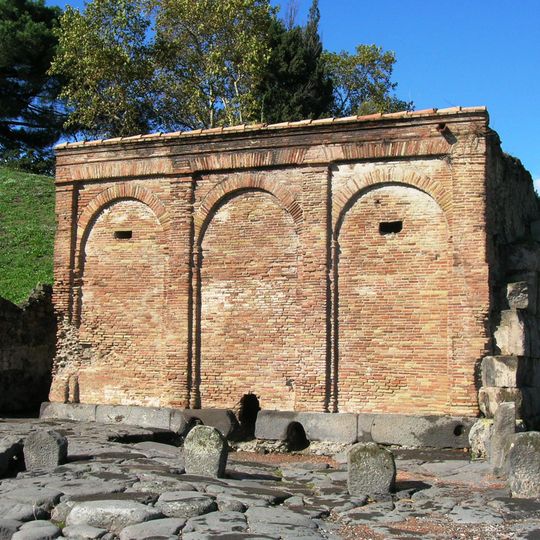
Castellum aquae, Water distribution building in ancient Pompeii, Italy.
The Castellum Aquae is a water distribution structure in Pompeii featuring a circular basin with pipes at different elevations for channeling water to various districts. This facility served as the central hub where incoming water was redirected through lead pipes toward different areas of the city.
The Castellum Aquae received water from the Serino aqueduct that supplied the entire city, and sustained damage during an earthquake in 62 AD. The eruption of Vesuvius in 79 AD preserved the structure in its damaged state.
The Castellum Aquae reveals how Romans managed the city's water supply and shaped daily life through this infrastructure. Visitors can observe how this structure was essential to serving private homes, public baths, and street fountains throughout the settlement.
The structure is accessible on foot within the archaeological site and sits at an elevated position, making it easy to spot and navigate to. Visitors should expect uneven ground typical of ancient ruins when walking around this location.
The installation featured a sophisticated gate system with breakwaters that allowed operators to fine-tune water pressure and redirect flow based on hourly needs. This early form of hydraulic control demonstrates how Romans tackled complex engineering challenges with practical solutions.
The community of curious travelers
AroundUs brings together thousands of curated places, local tips, and hidden gems, enriched daily by 91,862 contributors worldwide.