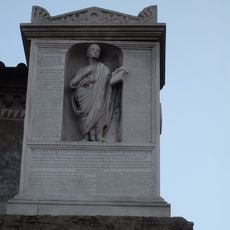
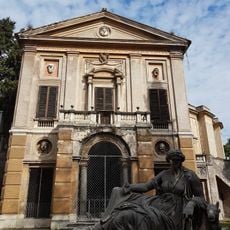
Catacomb di Trasone, catacomb in Rome, Italy
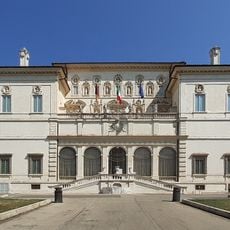
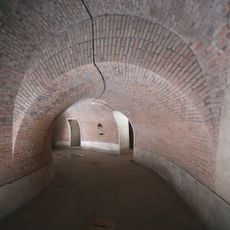
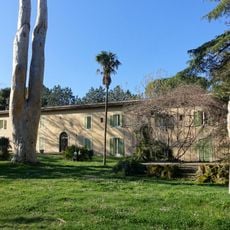
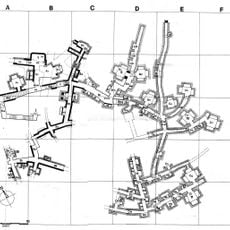
The Catacomb di Trasone is an underground burial site in Rome that spans five levels deep and originated from a sandstone quarry that was later converted into a burial place. The tunnels run beneath Villa Grazioli and its adjacent park and contain ancient burial chambers with inscriptions and paintings from early Christian times.
The catacomb originated in the third century from an ancient sandstone quarry that was used by early Christians as a burial site. In the late sixteenth century, the tunnels were rediscovered by researcher Antonio Bosio, and in the following centuries relic hunters damaged some original structures until excavations beginning in 1966 began to preserve the site.
The name Trasone comes from a wealthy Roman who converted to Christianity during the reign of Emperor Diocletian and was connected to early Christian communities in Rome. The site also served as a place of veneration for Saint Saturninus, a martyr from Carthage whose tomb was honored here and drew many pilgrims.
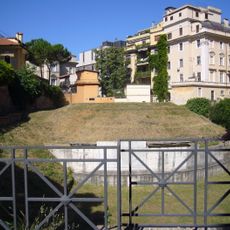
The entrance is located near Villa Grazioli through a ground opening and access typically occurs only with a knowledgeable guide or as part of an organized group. The tunnels are cool and dark with narrow passages, so visitors should bring comfortable shoes and a jacket and move carefully through the corridors.
Two well-preserved frescoes depict biblical scenes: Moses striking water from a rock and scenes from the Book of Jonah, dating to the late third or early fourth century. These rare early Christian artworks were long overlooked by relic hunters and remain today valuable records of early Christian faith.
The community of curious travelers
AroundUs brings together thousands of curated places, local tips, and hidden gems, enriched daily by 92,551 contributors worldwide.