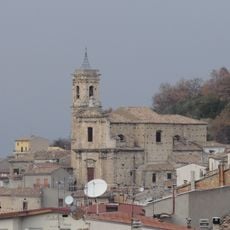
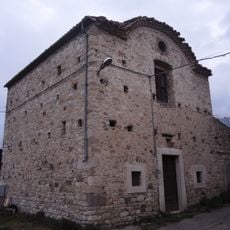
Castello di Roccascalegna, Medieval castle in Abruzzo, Italy
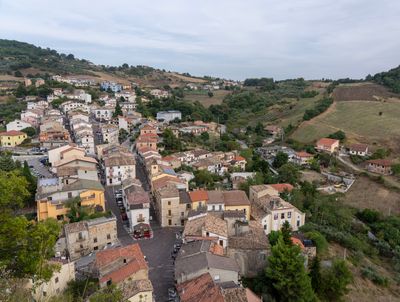
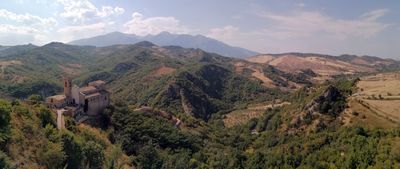
Castello di Roccascalegna stands on a rocky spur above the town, its walls of rough stone, pebbles and brick fragments enclosing a courtyard. A steep stepped path from the San Pietro plain leads to the entrance, where remains of the drawbridge survive; to the right is the sentinel tower, and further towers include the prison tower and the Angevin tower.
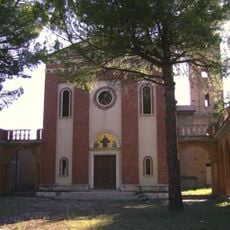
A Lombard guard tower was expanded into a castle around the 11th-12th century; the first written mention dates to 1525, referring to repairs. The Annecchino family reinforced the towers and added a circular one, while the Carafa barons, in power from 1531 to 1600, built the Chapel of the Holy Rosary in 1577 and improved rainwater collection. Under the Corvi, after 1705, the drawbridge was demolished and the entrance guardhouse and ramp wall were built.
The castle displays a mix of Romanesque and medieval elements that visitors encounter while moving through its different spaces. The stone defensive structures reflect the need to protect the village below from attacks.
Access is by a steep stepped path from the San Pietro plain, cut into terraces on the rock, leading to the entrance where the drawbridge remains are visible. The route continues over ramps between the towers, so sturdy shoes help. The castle reopened after restoration completed in 1996.
According to local legend, Baron Corvo de' Corvis invoked the ius primae noctis in 1646 and was stabbed by a newlywed, or by the husband disguised as the bride. As he died he left the indelible imprint of his bloody hand on a rock, not on the walls. Tradition holds that the mark, clearly visible after the collapses of 1940, keeps reappearing however often it is washed away.
The community of curious travelers
AroundUs brings together thousands of curated places, local tips, and hidden gems, enriched daily by 92,674 contributors worldwide.