Santa Croce, Religious monument in Venice, Italy
Santa Croce was a church in Venice on the Grand Canal, demolished in the first half of the 19th century. It had an austere facade with three portals and nine altars inside, including a major altar with Paolo Piazza's Adoration of the Cross. The church also housed works by Tintoretto, Palma il Giovane, and others, and the tombs of doges Domenico Morosini and Orio Mastropiero.
The church was first established in the 6th century and underwent major rebuilding in the 14th and 16th centuries. These reconstructions reflected changing architectural tastes and the community's evolving needs across different historical periods.
The sestiere of Santa Croce takes its name from this former church. The monastic community began in 1460 with two hermits, Sofia Veneziana and Agnese Ungara, allowed to build cells beside the church; by 1470 they had formed a community of Franciscan tertiaries, later Poor Clares. Pope Sixtus IV granted them full control of church and monastery after the death of prior Eugenio Memmo.
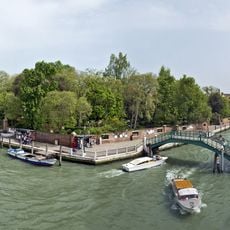
The church no longer exists: it was demolished in the first half of the 19th century, so there is nothing to visit. Its site lies where the Giardini Papadopoli were later laid out, partly affected by the construction of the Piazzale Roma bus terminal. Look for the garden area near the Grand Canal to locate the former position.
Santa Croce no longer exists: it was demolished in the first half of the 19th century after serving as a warehouse. Its site was turned into the Giardini Papadopoli, later partly occupied by the Piazzale Roma bus terminal. The sestiere still carries the church's name.
The community of curious travelers
AroundUs brings together thousands of curated places, local tips, and hidden gems, enriched daily by 92,948 contributors worldwide.