Chiostri di San Domenico Maggiore, Gothic cloister in the historic centre, Naples, Italy
The Chiostri di San Domenico Maggiore are three cloisters of the former Dominican convent in Naples. The cloister of San Tommaso, rectangular in plan, has its north and west sides partly enclosed by a wall. The small cloister, called delle statue, has four statues from the former church of San Sebastiano at the corners of its green area. The large cloister, of Renaissance date, keeps one side of its portico with barrel vaults, Tuscan capitals and round arches.
The complex was commissioned by Charles I of Anjou and built by the Dominicans in Gothic forms. The cloisters were rebuilt after earthquakes in the 15th century and a fire in 1506, and the friars kept altering them until the end of the 19th century. In the 20th century a change of use separated them from the convent.
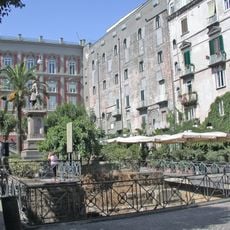
The four statues at the corners of the central green area gave the small cloister its name, "chiostro delle statue"; they come from the no longer existing church of San Sebastiano. This cloister is the only one of the three still under clerical authority and the one through which the convent of San Domenico Maggiore is reached.
Of the three cloisters, only the small one called "delle statue" is open to visitors; it is managed by the cultural service of the Municipality of Naples. The entrances to the San Tommaso cloister (now a gym) and the large cloister (now the Casanova institute) are not open to the public. Check access conditions with the municipal service before planning a visit.
The large cloister, now housing the Casanova institute, is the one that included the cell where Giordano Bruno lived during his years of study in the convent. Only one side of its portico survives, with barrel vaults, Tuscan capitals and round arches.
The community of curious travelers
AroundUs brings together thousands of curated places, local tips, and hidden gems, enriched daily by 94,213 contributors worldwide.