Monumental cemetery of Legnano, National heritage cemetery in Legnano, Italy
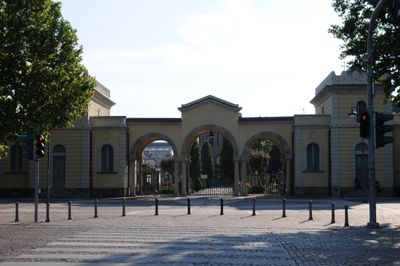
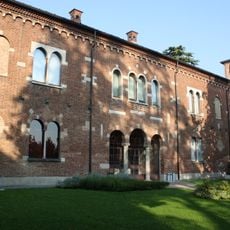
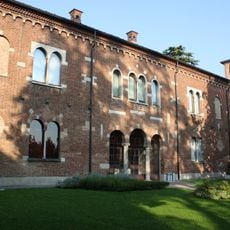
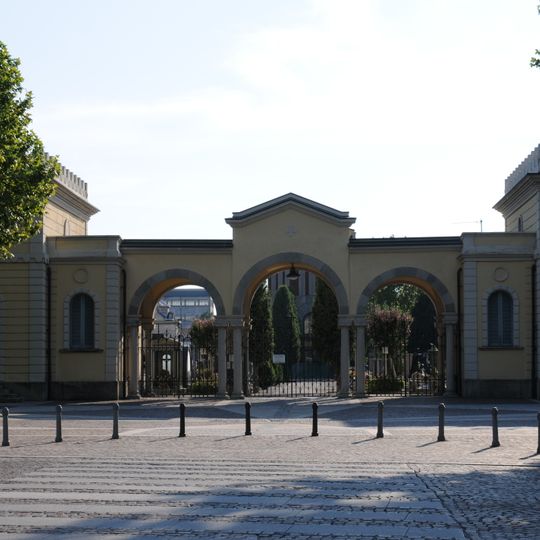
The monumental cemetery of Legnano was designed by engineer Renato Cuttica and opened in 1898 on Corso Magenta, covering 18,942 m², later enlarged to 50,000 m² in 1907. Chapels of the wealthier Legnano families line the perimeter walls, while a grey sandstone chapel stands at the centre and the war dead lie at the end of the main avenue.
Construction of the monumental cemetery was approved by provincial decree in January 1896; work began on 29 March 1897 and ended in September 1898. It was blessed on Sunday 24 July 1898, with an initial area of 18,942 m², and burials began on 17 September 1898, the same day the old cemetery closed after exactly ninety years. Designed by engineer Renato Cuttica, it was enlarged in 1907 to 50,000 m².
The old cemetery's painted aedicules were moved here, and three now stand in the city museum: they show the painters Antonio Maria Turri, Beniamino Turri and Mosè Turri. The graves of the wealthiest Legnano families line the perimeter walls in their own chapels, while the war dead lie at the end of the main avenue.
The cemetery lies along Corso Magenta in Legnano's southern outskirts. The main avenue runs from the entrance to a central grey sandstone chapel, with family chapels along the perimeter walls and war dead buried at the far end. The grounds were enlarged to 50,000 m² in 1907, adding new columbaria and burial fields.
Three painted aedicules from the old cemetery, bearing the faces of the painters Antonio Maria Turri, Beniamino Turri and Mosè Turri, were moved and are now displayed at the city's Museo civico. The monumental cemetery also holds a sandstone chapel for believers at its centre, while the war dead lie at the end of the main avenue.
The community of curious travelers
AroundUs brings together thousands of curated places, local tips, and hidden gems, enriched daily by 94,674 contributors worldwide.