Covolo di Butistone, Medieval fortification in Valbrenta, Italy.
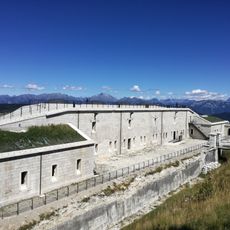
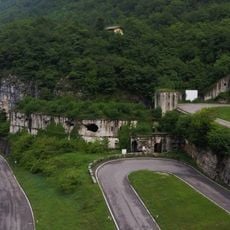
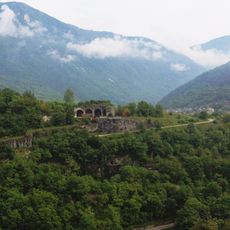
Covolo di Butistone is a medieval fortress located at 300 meters altitude within a karst cavity, featuring three distinct levels connected by protected pathways cut through the mountain rock. The complex integrates natural stone formations with built structures for defense and traffic control.
The first documented reference dates to 1004, when Emperor Henry II's forces seized it during Holy Week as part of their campaign against King Arduino of Italy. The fortification served strategic purposes in controlling passage through the mountain region.
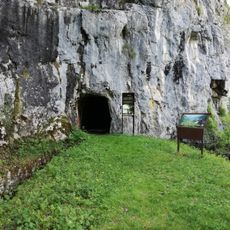
The name comes from Cimbrian words: "bunta" means wound and "stoon" means stones, referring to the cave opening in the mountain face. This reveals how the landscape shaped the daily speech of people who lived here.
Access begins from State Road 47 between Cismon del Grappa and Primolano, where parking is available followed by approximately 30 minutes of walking to reach the site. Check weather conditions beforehand as the narrow rocky paths can become slippery in wet conditions.
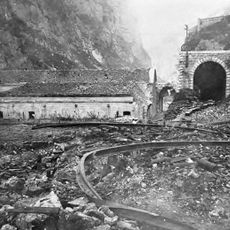
Coins bearing the effigy of Emperor Aurelian were found within the perimeter, suggesting the cave may have been fortified in Roman times; the spring water inside could have drawn visitors in earlier centuries. In 1782 Joseph II of Austria ordered it disarmed, and during the Great War it served as a powder magazine.
The community of curious travelers
AroundUs brings together thousands of curated places, local tips, and hidden gems, enriched daily by 92,777 contributors worldwide.