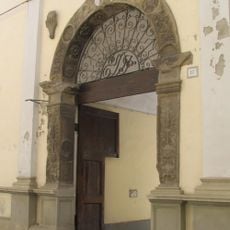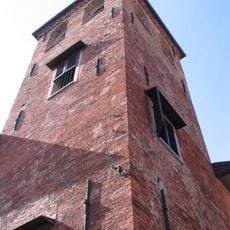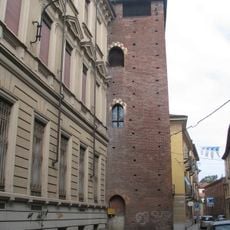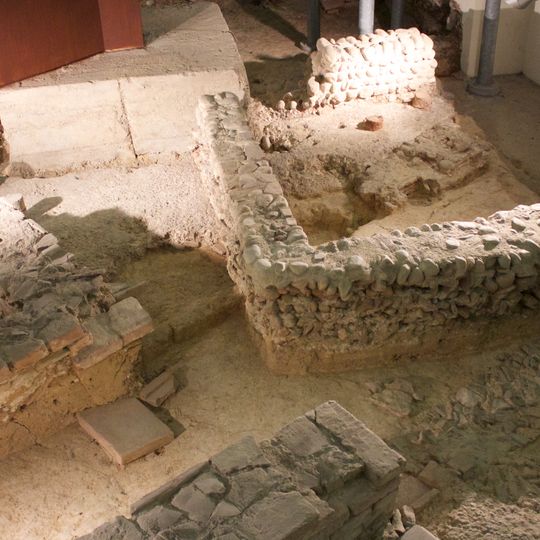
Domus Romana, Ancient Roman house in Asti, Italy.
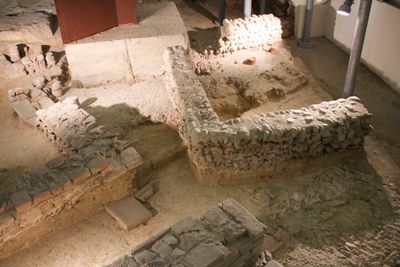
Domus Romana is an archaeological site containing the remains of a Roman residence with a preserved floor mosaic displaying fish and ivy patterns. The structure included multiple rooms with carefully designed floors and durable foundations from masonry work.
The Domus Romana in Asti dates from the late 1st to early 2nd century AD. It stood about 80 metres north of the Torre Rossa, in the area of the Varroni castle, with walls aligned perpendicular to the ancient Via Fulvia, today's Corso Alfieri. Other Roman domus remains have since been found nearby, including a room with marble tessellated flooring in the basement of Palazzo della Rovere on Via Giobert.
The floor mosaic, 3 by 1.70 metres, is made of black and white tesserae in opus tessellatum, framed by an inner herringbone border and an outer braided one. Coloured marble inlays of serpentine, green and yellow Numidian marble alternate with dolphins, fish and aquatic plants. Such mosaics are rare in Piedmont excavations, which gives the Asti find its weight.
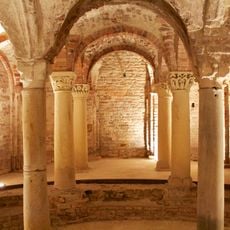
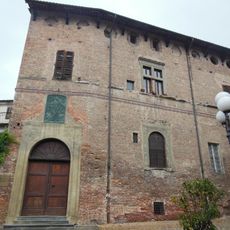
The archaeological remains are housed in the basement of the municipal Canuto Borelli elderly care facility, which protects the ancient structure. Access is available from outside, but it is advisable to check ahead about opening times and visitor conditions.
A short distance from the mosaic lies the mouth of a furnace that fed the domestic heating through voids beneath the floors, the so-called hypocaust. The walls are oriented perpendicular to the ancient Via Fulvia, today's Corso Alfieri, the former decumanus maximus.
The community of curious travelers
AroundUs brings together thousands of curated places, local tips, and hidden gems, enriched daily by 94,600 contributors worldwide.