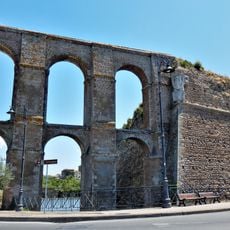
Fort Sangallo, Renaissance fort in Civita Castellana, Italy.
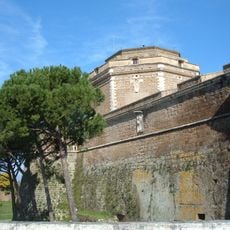
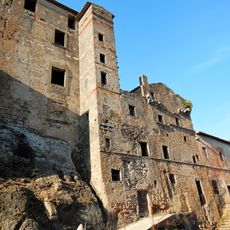
Fort Sangallo is a pentagon-shaped fortress in Civita Castellana with massive stone walls, angular corner bastions, and a deep protective moat encircling the entire perimeter. The structure combines red brick and stone construction and was designed to control access from multiple directions.
Pope Alexander VI had the fortress begun in 1494 as part of a programme to secure strongholds for the Borgia family; Antonio da Sangallo the Elder is documented on the site from 1499 until the pope's death in 1503. After the Borgias it passed to the papacy, and work was completed under Julius II, perhaps by Bramante and certainly by Antonio da Sangallo the Younger, who added the octagonal keep years later.
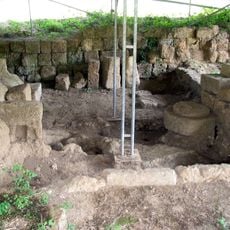
The Archaeological Museum of Agro Falisco housed within displays artifacts from ancient Faliscan settlements in the surrounding region. The collection reveals how people lived and worked in this area thousands of years ago.
The fortress stands on the western edge of Civita Castellana, outside the old town, on the site of earlier medieval fortifications. Access to the inner complex crosses the moat line once controlled by a drawbridge and a bastioned ravelin. The museum occupies two sides of the upper loggia, while the north side corresponds to the papal apartment.
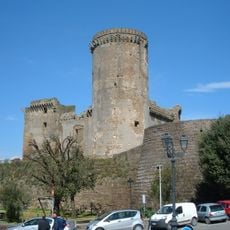
The fortress stands on the site of earlier medieval fortifications, chosen because it was the only side of Civita Castellana not protected by tufa cliffs. The pentagonal curtain wall, the octagonal keep added later by Antonio da Sangallo the Younger, and the deep moat with a drawbridge controlled by a bastioned ravelin were designed to resist gunpowder artillery.
The community of curious travelers
AroundUs brings together thousands of curated places, local tips, and hidden gems, enriched daily by 94,430 contributors worldwide.