Ferrata Tridentina, Via ferrata in South Tyrol, Italy.
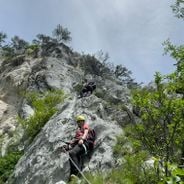
Ferrata Tridentina is an iron-equipped climbing route ascending vertical limestone walls of the Sella Group, featuring metal rungs, cables, and a suspension bridge. The path winds through rock passages and technical sections that guide climbers across varying difficulty levels.
The route is officially named Via Ferrata Brigata Tridentina, after the Italian brigade. It was equipped with metal cables and rungs in the 20th century; the sources do not date its construction to World War I. It is now one of the most frequented via ferrate in the Dolomites, rated difficulty C.
The route carries two official names: Via Ferrata Brigata Tridentina in Italian and Pisciadù-Klettersteig in German, after the Pisciadù waterfall and hut beside it. The Italian name honours the Brigata Tridentina, the World War I unit remembered in the Dolomites. Signs at the trailhead near Passo Gardena use the Italian form.
The route is rated EEA (difficulty C) and demands good experience and no vertigo, especially on the exposed final section. Allow about 3 hours to reach Rifugio Cavazza al Pisciadù and 1.5 hours to descend trail 666 through Val Setus, which is partly equipped and very steep; take care with rain or snow. The main car park lies eight hairpins below Passo Gardena on the Val Badia side, five minutes from the entry. Best season is mid-June to mid-September, avoiding weekend queues.
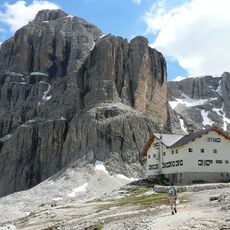
The route's third and hardest section ends at a narrow steel suspension bridge that leaves the Torre Exner (2,496 m) and drops onto the scree field of the Brunecker Turm, from where the Cavazza al Pisciadù hut is a few minutes away. The bridge hangs over a deep rock cleft and is the most exposed passage of the Via Ferrata Brigata Tridentina.
The community of curious travelers
AroundUs brings together thousands of curated places, local tips, and hidden gems, enriched daily by 92,927 contributors worldwide.