Heraion at the Mouth of the Sele, Archaeological site in Capaccio Paestum, Italy
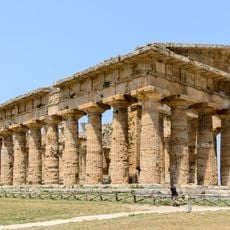
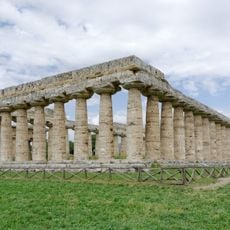
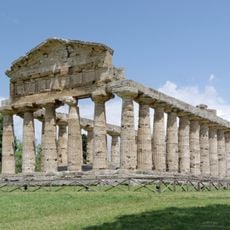
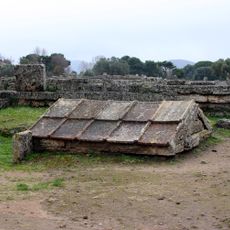
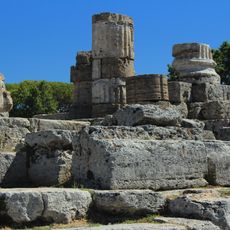
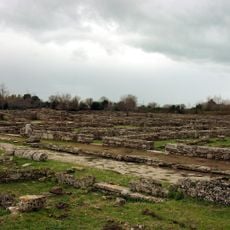
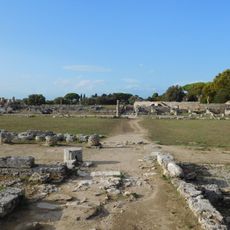
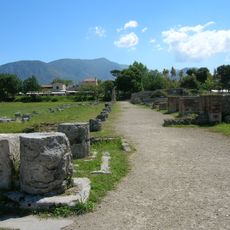
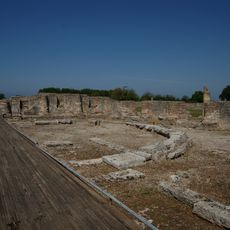
The Heraion at the Mouth of the Sele is an archaeological site in Capaccio Paestum where only the lowest courses of the sanctuary buildings remain, scattered as pale grey and tan stone blocks and slabs across a grass field. A low wire fence runs in front of the stones, and a small box-like unit with a blue-grey panel stands at the right side of the spread.
The site was founded around the 6th century BC as a religious center for worshipping Hera. The sanctuary underwent successive renovations and expansions, indicating its importance to the ancient communities that inhabited the region.
The cult of Hera Argiva, protectress of navigation and fertility, was served by girls preparing for marriage who wove a peplos for the cult statue, offered each year in procession. A marble Hera seated on a throne with a pomegranate was found here. The cult survived in Christian form as the Madonna del Granato, whose nearby sanctuary repeats the pomegranate. The roughly 70 sandstone metopes are now in the Paestum museum, not on site.
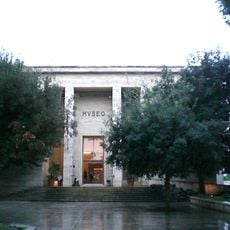
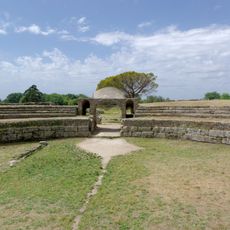
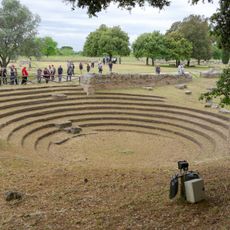
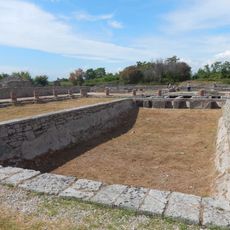
The excavated area lies flat behind a low wire fence, with a dirt path and two grey bins in front; the stone blocks are best seen from the path. A modern museo narrante on site uses video displays to project reconstructions of the sanctuary. The coast is now about 2.3 km away and the Sele about 1.5 km, so the open field gives little shade at midday.
The sanctuary was positioned at a river mouth, making it accessible to pilgrims arriving by water and enhancing its spiritual importance. This location connected inland communities with maritime routes, creating a unique meeting point for travelers from different regions.
The community of curious travelers
AroundUs brings together thousands of curated places, local tips, and hidden gems, enriched daily by 92,784 contributors worldwide.