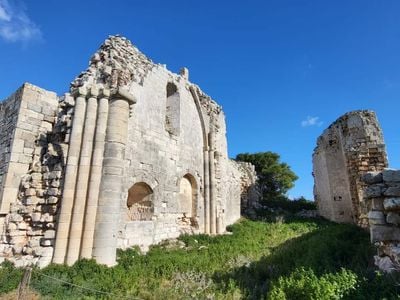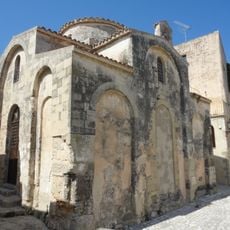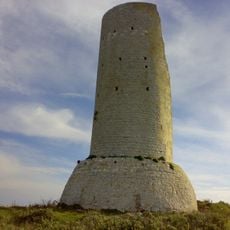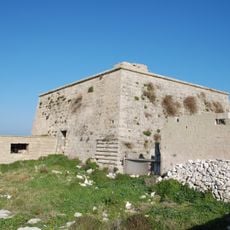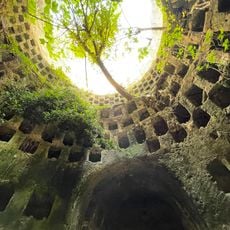
Monastero di S. Nicola di Casole, Medieval Basilian monastery near Otranto, Italy.
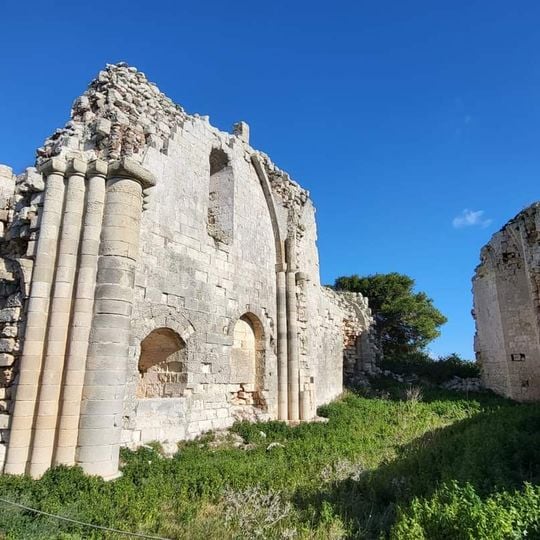
The Monastero di S. Nicola di Casole is a medieval monastery complex near Otranto with partially standing walls and a semicircular apse featuring Gothic architectural details. The layout of the buildings remains visible, showing how the original structure was organized.
According to the monastery's Typikon, preserved in a Turin manuscript, it was founded in 1098/1099 by its first abbot, Joseph; a donation by Bohemond of Taranto from 1104–1111 is documented. In 1480 Turkish troops under Ahmet Pasha occupied it as an observation post but did not destroy it; the abbey was abandoned, its library dispersed, and it later became part of a masseria until the 20th century.
The name Casole derives from the Salentine dialect word càsule, the small cells and huts that housed the monks around the monastery. In the early 13th century Abbot Nektarios led a circle of Greek-language poets here, including Georgios of Gallipoli and John Grassus of Otranto. Umberto Eco's novel The Name of the Rose makes the miniaturist monk Adelmo da Otranto a native of San Nicola di Casole.
The ruins are located along the coastal road heading toward Santa Cesarea Terme and can be reached on foot. Wear appropriate footwear, as the site sits on open ground with uneven surfaces.
The Greek-Idruntine mosaicist Pantaleone, credited on the Otranto Cathedral floor mosaic, is thought to have drawn on the Casole library for its iconographic and symbolic programme, though the German source calls this link unprovable and debated in recent scholarship. The abbey's own Typikon, a rulebook of monastic customs, survives in Turin's National Library.
The community of curious travelers
AroundUs brings together thousands of curated places, local tips, and hidden gems, enriched daily by 93,466 contributors worldwide.