Santa Maria delle Cacce, building in Pavia, Italy
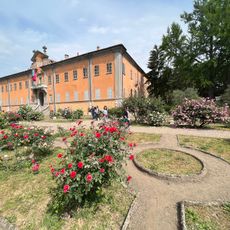
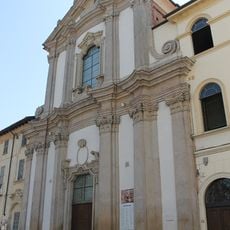
Santa Maria delle Cacce stands on Via Scopoli in an open, elevated spot near Pavia's Spanish Walls. Its 16th-century cloister now serves as a school building, while the late-17th-century church is a Baroque structure fully frescoed in the 16th century. The Lombard-era church had three naves and three apses; a Roman marble column from that phase remains set into the north wall of the modern choir, and the crypt below preserves three rooms linked by a transverse corridor with stairs at the ends.
The monastery was founded in the 8th century by King Rachis or Desiderio and initially housed Benedictine nuns. Its name changed in the 14th century from Santa Maria foris portam to Santa Maria delle Cacce, as it lay outside the city walls, and underwent major rebuilding particularly in the 17th century.
The monastery was closely linked to local churches and served as a spiritual center for the surrounding communities. The Benedictine nuns who lived here for centuries shaped the religious life of nearby villages and lands.
The monastery and church stand on Via Scopoli, in an open, elevated spot near Pavia's Spanish Walls. The 16th-century cloister now serves as a middle school named after Felice Casorati, so the former monastic rooms are school premises rather than a visitable monument. The church, rebuilt at the end of the 17th century, keeps a small window, a small column and the Lombard crypt; the crypt has three rooms joined by a transverse corridor with stairs at its ends.
The name Cacce, meaning hunt, recalls the royal hunting park that likely gave the monastery its name from the 14th century. The Lombard crypt has three chambers matching the three apses of the original church, linked by a transverse corridor with stairs at both ends — a plan unlike the Roman semicircular crypt of San Pietro.
The community of curious travelers
AroundUs brings together thousands of curated places, local tips, and hidden gems, enriched daily by 94,456 contributors worldwide.