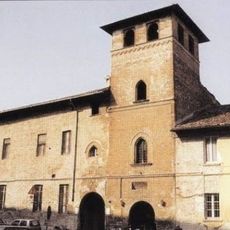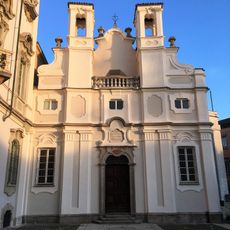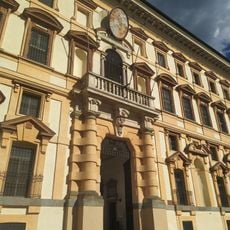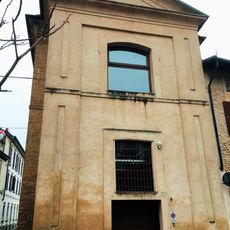
Santi Primo e Feliciano, Pavia, Romanesque church in Pavia, Italy
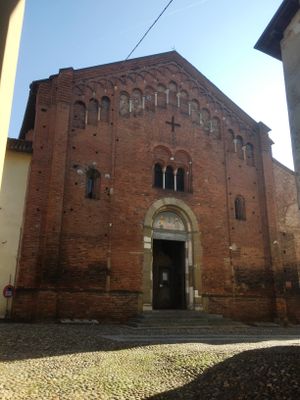
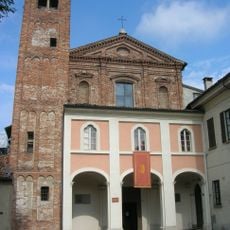
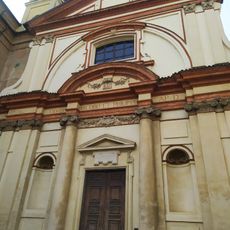
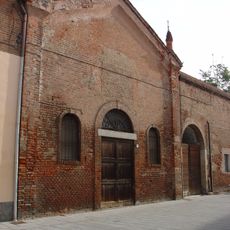
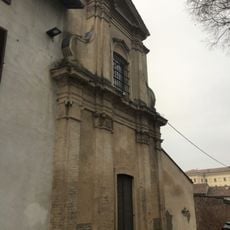
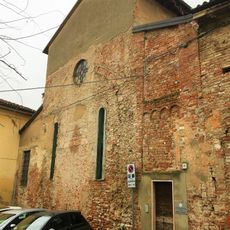
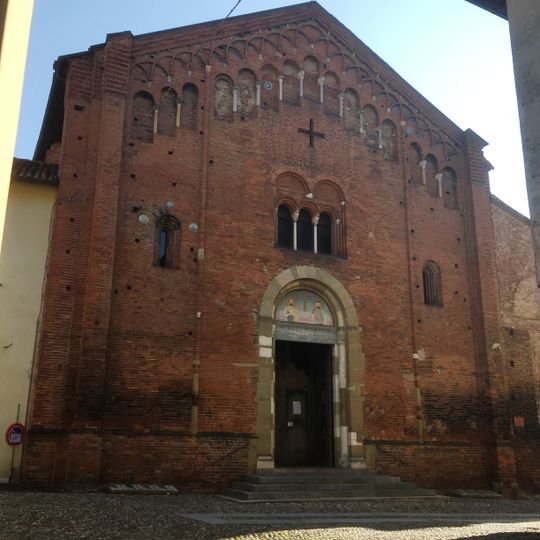
Santi Primo e Feliciano is a Romanesque church in central Pavia whose 12th-century facade, restored in 1940, ends in a blind loggia of intertwined hanging arches above a mosaic lunette. The interior is a single nave with three altars on the north side and four on the south, plus a Gothic nave added in the 15th century.
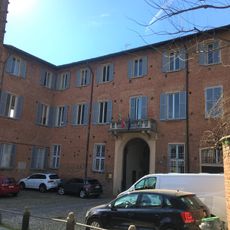
The church arose in the second half of the 12th century over remains of Roman buildings; excavations in 2008–2009 in its courtyard uncovered Late Antique structures and tombs. It became a parish around 1230, and in 1354 its college of canons joined the Servants of Mary, remaining until 1810. The Romanesque three-nave layout with tiburio, dome and transept was altered in the 15th century by an added Gothic nave, then in the late 16th century reduced to a single nave with the demolition of the tiburio and Romanesque apse; the 12th-century facade was left intact.
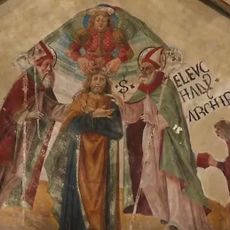
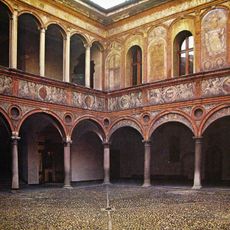
The church displays artworks spanning different periods, including a 1498 painting of the Virgin and Child and frescoes showing the lives of its patron saints. Visitors can discover these works while moving through the interior and learn about the local artistic tradition.
The church is centrally located in Pavia and functions as an active place of worship, so visitors should wear appropriate clothing and be respectful during services. It is wise to check opening hours in advance, as these may vary depending on religious events.
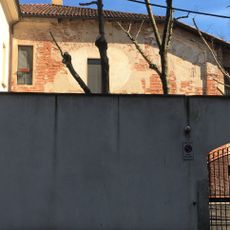
Excavations in the church courtyard in 2008 and 2009 uncovered structures and tombs from Late Antiquity, before the 12th-century church rose beside Roman remains. The finds place the site's occupation well before the Romanesque building, and the facade was restored in 1940 with a mosaic added to the portal lunette.
The community of curious travelers
AroundUs brings together thousands of curated places, local tips, and hidden gems, enriched daily by 94,670 contributors worldwide.