Sabotin, Mountain summit on the border between Slovenia and Italy
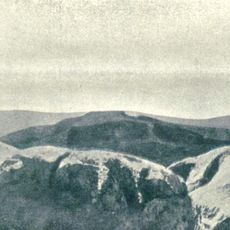
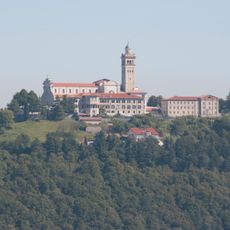
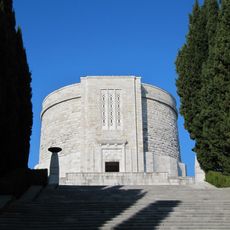
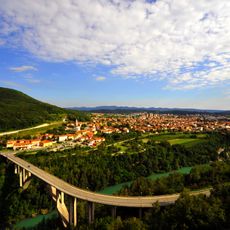
Sabotin rises 609 meters above sea level and marks the natural border between Slovenia and Italy, featuring steep slopes and limestone rock faces. The summit is crisscrossed with military installations dating back to World War I.
Sabotin was held by the Austro-Hungarian 58th Division defending Gorizia. Italian attacks in the First Battle of the Isonzo, between 24 June and 4 July 1915, failed. On 6 August 1916, during the Sixth Battle of the Isonzo, the 45th Division under General Giuseppe Venturi took the mountain after preparation directed by Pietro Badoglio, who was later made Marquis of Sabotino.
The mountain holds preserved trenches and tunnels that form an open-air museum dedicated to World War I heritage. Visitors can explore military structures that tell the story of the conflict that shaped this region.
Multiple marked trails lead to the summit from both the Italian and Slovenian sides, many with informational panels about the history. The ascent requires moderate fitness and rewards hikers with views across both countries.
On the Slovenian slope, a few dozen metres from the Italian border, a stone inscription reading NAŠ TITO was laid out in 1978, with letters 25 metres high and about 100 metres long, visible from the Gorizia valley. After 1991 it was repeatedly altered by unknown hands, at one point reading NAŠ FIDO; since 2014 it simply says TITO.
The community of curious travelers
AroundUs brings together thousands of curated places, local tips, and hidden gems, enriched daily by 93,638 contributors worldwide.