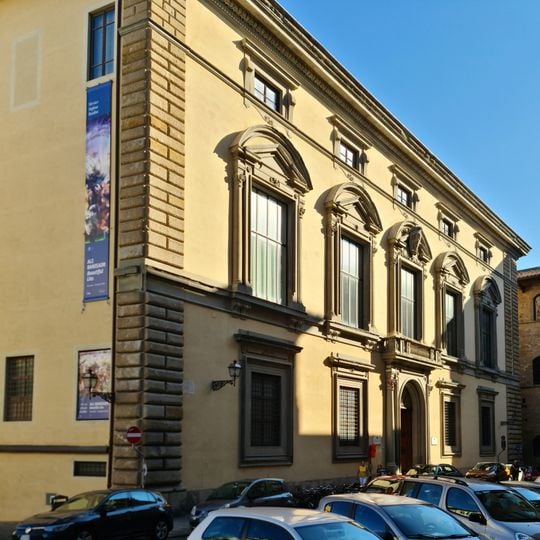
Museo Bardini, Art museum in Oltrarno, Florence, Italy
The Museo Bardini is housed in a palazzo in the Oltrarno district and displays over 3600 artworks spanning paintings, sculptures, and ceramics. The building itself features medieval and Renaissance elements integrated into its architectural design.
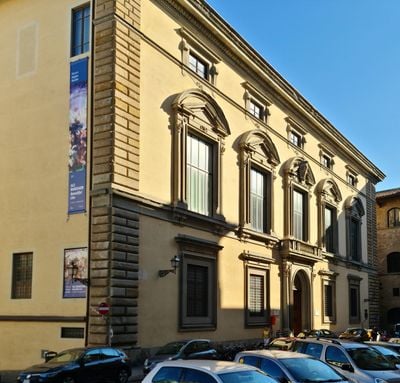
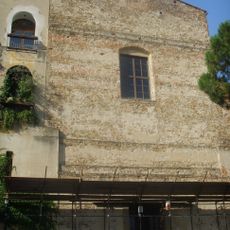
The Mozzi family founded the church of San Gregorio della Pace in 1273 to mark the peace between Guelphs and Ghibellines; its convent passed to the Padri del Belmorire in 1600 and was suppressed in 1775. Stefano Bardini bought the whole complex in the 1870s and built the present palazzo between 1881 and 1883 with architect Corinto Corinti, incorporating the 13th-century church. He left it to Florence on his death in 1922; it opened in 1925 and reopened on 4 April 2009 after restoration.
The ground-floor rooms once gathered emblems of Florence itself: Pietro Tacca's bronze boar from the Porcellino fountain, Giambologna's Diavolino and the gilded Marzocco from Palazzo Vecchio, later replaced on site by copies. A 7.5-metre carpet hangs along the staircase, said to have been used for Hitler's 1938 visit to the city.
The entrance is at via de' Renai 37, with the exit at piazza de' Mozzi 1, so visitors pass through the building from one street to the other. The palazzo was closed from 1999 and reopened on 4 April 2009 after restoration, with rooms rearranged to follow the 1922 inventory. Look for the marble plaque with Gothic lettering on the left of the facade, at the corner with via dei Renai.
The blue paint on many of the museum's walls, dubbed "Bardini blue", was recovered during the 2009 restoration from stratigraphic samples and a letter Bardini wrote to collector Isabella Stewart Gardner revealing the secret of his colour. It had been covered in ochre after his death.
The community of curious travelers
AroundUs brings together thousands of curated places, local tips, and hidden gems, enriched daily by 94,041 contributors worldwide.