Palazzo Serristori, Oltrarno, Renaissance palace in Oltrarno district, Florence, Italy
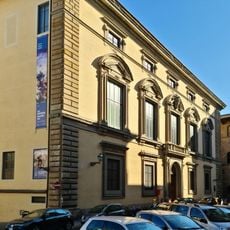
Palazzo Serristori is a Renaissance palace in the Oltrarno district with a U-shaped layout centered around a rectangular courtyard. Three arched openings frame views toward a garden facing the Arno River, and the structure has undergone substantial restoration in recent years.
Bishop Lorenzo Serristori built the palace in 1520–1522 near the mills and fulling works of the Renai area. His nephew Averardo, ambassador to Cosimo I de' Medici, enlarged it and laid out a garden toward the Arno. In 1803 Senator Averardo Serristori had architect Giuseppe Manetti rework the river front and garden. The 1873 opening of the Lungarno cut the palace off from the river, shrank the garden and destroyed a suspended passage to Ponte alle Grazie; Mariano Falciani built the new Lungarno facade.
The ballroom, completed with help from Felice Gamberai, has three large windows topped by smaller ones and is lit by Murano glass chandeliers. Its vaults and walls were decorated by Pier Paolo Lippi, Agnolo Gori and Cosimo Ulivelli. The Serristori name comes from Ser Ristoro, a local magistrate, and the family coat of arms above the portal facing San Niccolò was modified by Pope Leo X, who added three lilies to the three existing stars.
The palace is now divided into residential apartments and cannot be visited inside by the public. You can view the exterior architecture and facade from the streets surrounding the Oltrarno district.
A plaque on the palace recalls Giuseppe Bonaparte, King of Spain and Napoleon's elder brother, who moved here with his family after the Restoration and died in the building on 28 July 1844. The ground-floor apartment set aside for him and part of the first floor were badly damaged in the Arno flood of 4 November 1966.
The community of curious travelers
AroundUs brings together thousands of curated places, local tips, and hidden gems, enriched daily by 93,687 contributors worldwide.