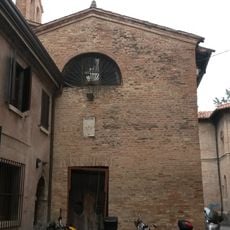
City Museum of Rimini, Municipal museum in central Rimini, Italy
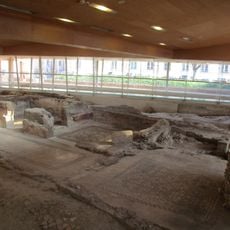
The Museo della Città di Rimini occupies the former Jesuit convent and college on Via Luigi Tonini, built by Alfonso Torreggiani between 1746 and 1755 and later used as the city hospital. Its rooms hold the archaeological section with finds from the Domus del Chirurgo, medieval and Renaissance paintings, and a cloister courtyard arranged as a Roman lapidarium with inscriptions from the 1st to 4th centuries.
The museum opened in 1981 and is named after Luigi Tonini, who founded Rimini's first civic museum. Its home, designed by Alfonso Torreggiani, was built from 1746 to 1755 as a Jesuit convent and college. After the order's suppression it served as a civic hospital from 1797 until 1977, was damaged in the Second World War and restored under architect Pier Luigi Foschi.
The museum keeps the Libro dei sogni, Federico Fellini's book of dreams, and a permanent display of works by the Rimini-born fashion illustrator René Gruau. The cloister garden was dedicated in 2015 to the archaeologist Khaled al-Asaad, killed at Palmyra in Syria.
The building is located in the city center and is easily accessible on foot, with exhibition areas spread across multiple levels. It is helpful to allow enough time to explore all the rooms and the stone garden area, especially if you are interested in archaeological finds.
In the basement of the building you will find rare medical instruments from a Roman doctor's practice that are nearly 2,000 years old. These objects offer a surprisingly detailed glimpse into the craft of an ancient physician and his tools.
The community of curious travelers
AroundUs brings together thousands of curated places, local tips, and hidden gems, enriched daily by 92,830 contributors worldwide.