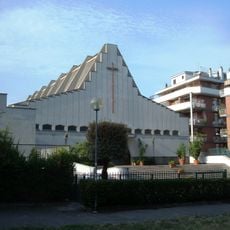
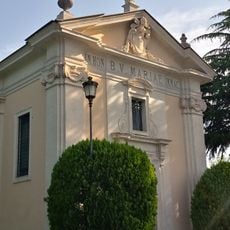
Casal de' Pazzi Museum, Archaeological museum in Rebibbia district, Rome, Italy.
Casal de' Pazzi Museum is an archaeological collection in Rome's Rebibbia district, displaying discoveries from an ancient riverbed. The museum houses bone remains and stone tools from prehistoric times, along with preserved sections of the Pleistocene deposit layer where these objects were originally embedded.
The deposit was identified in 1981 during urbanisation works in the Casal de' Pazzi district near Ponte Mammolo. It is attributed to isotopic stage 7, about 200,000 years ago, and preserves the last visible trace of the Pleistocene deposits that once lined the lower Aniene valley, the others destroyed by the city's growth.
The exhibition features a walkway overlooking fossil deposits and digital reconstructions showing the ancient landscape, allowing visitors to sense how humans and large animals coexisted. The displays illustrate how people adapted to changing environments in prehistoric times.
The museum has different opening hours on weekdays compared to weekends, so checking ahead is wise before planning your visit. Reservations are recommended to ensure access and to confirm current visiting conditions.
Among the more than 2,000 faunal finds are about thirty tusks of the extinct straight-tusked elephant Elephas antiquus; the largest measures 3.50 m. Fossil leaves of Zelkova crenata, a tree up to 30 m tall now native to the Black Sea and Caspian regions, were also found in the deposit.
The community of curious travelers
AroundUs brings together thousands of curated places, local tips, and hidden gems, enriched daily by 94,431 contributors worldwide.