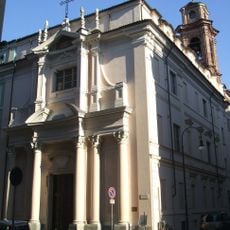
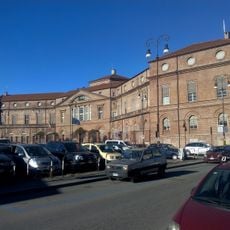
Palazzo Barolo, Palace and art museum in Quadrilatero Romano, Turin, Italy
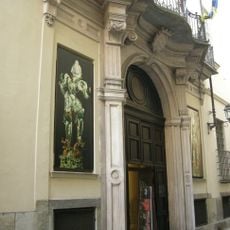
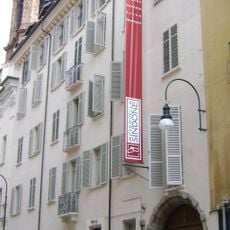
Palazzo Barolo is a palace and art museum in Turin's historic Quadrilatero Romano district, built in the late 17th century with Rococo design. Its rooms display ornate decorative details and now serve as exhibition spaces for contemporary and modern artworks.
Gian Francesco Baroncelli built the palace at the end of the 17th century, renovating a house already owned by Count Ottavio Provana di Druento, first equerry and grand wardrobe keeper to Vittorio Amedeo II of Savoy. In 1727 it passed to Ottavio Giuseppe Falletti di Barolo, who around the mid-18th century had Benedetto Alfieri remodel it in the Rococo taste. The Falletti held it until Tancredi (d. 1838) and Giulia di Barolo (d. 1864), who left it to the Opera Pia Barolo.
The palace is named after the Falletti di Barolo, the family whose line ended with Tancredi (d. 1838) and Giulia di Barolo (d. 1864), who left it to the Opera Pia Barolo. Giulia founded schools and charities, and Silvio Pellico, author of Le mie prigioni, lived here for years and taught in them. His room is on the museum route.
Access is typically from the main street, and visitors should be prepared for stairs inside, especially when exploring multiple floors of the building. Hours vary depending on the current exhibition, so it is wise to check if the museum is open before making the trip.
The main staircase sits unusually in the center of the building rather than along a wall, which was uncommon for noble homes of that era. This design choice shows forward-thinking planning that made the interior layout more efficient.
The community of curious travelers
AroundUs brings together thousands of curated places, local tips, and hidden gems, enriched daily by 94,222 contributors worldwide.