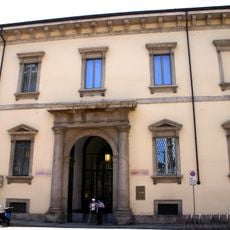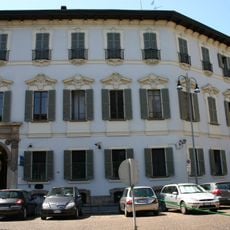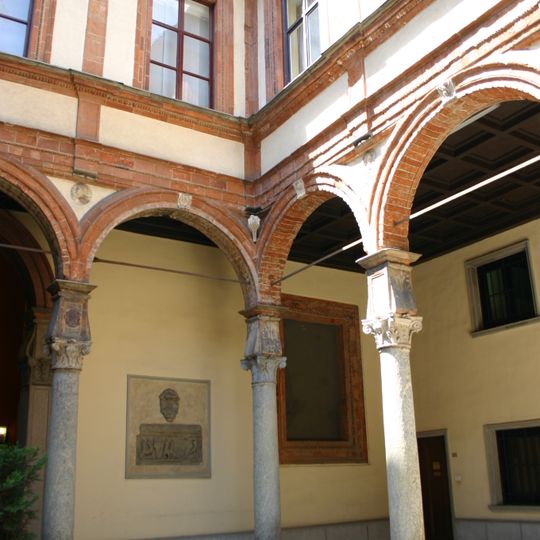
Palazzo Isimbardi, Renaissance palace and art collection near Via Torino, Milan, Italy
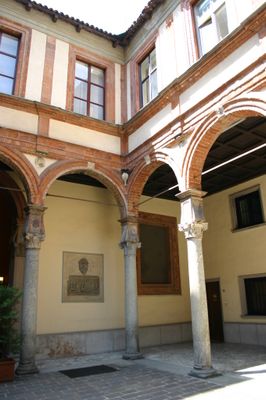
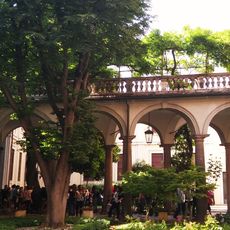
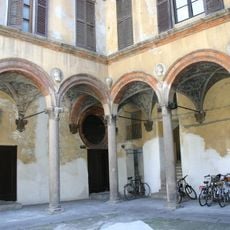
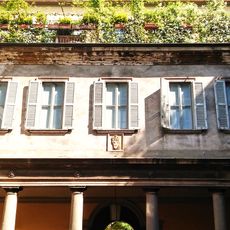
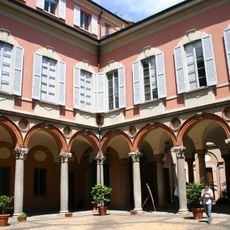
Palazzo Isimbardi is a Renaissance palace in Milan whose central courtyard keeps its original terracotta and stone decoration. Each side has a portico of three round arches on slender grey stone columns with carved composite capitals, topped by inverted brackets. Stone medallions with profiles of Roman emperors sit between the arches, and the upper windows rest on a continuous sill.
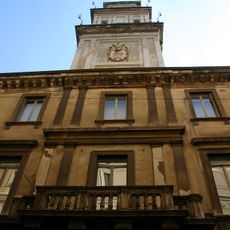
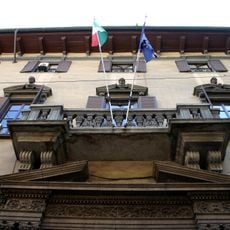
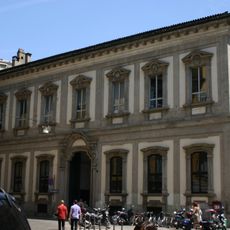
Begun at the end of the 15th century for Bergonzio Botta, a high official at the court of Ludovico il Moro, the palace passed to the Pozzobonelli, marquesses of Arluno, who gave it their name. Cardinal Giuseppe Pozzobonelli, archbishop of Milan from 1743 to 1783, made it his residence and promoted new restorations and decorations. Ferdinando Reggiori restored it in the 1920s; the 1943 bombings burned the interiors and destroyed much of the 18th-century facade.
The name comes from the Pozzobonelli, marquesses of Arluno, linked to the Isimbardi; their arms, an eagle, and the Isimbardi arms, three diagonal stars, are set in the corners of the main courtyard. Cardinal Giuseppe Pozzobonelli, archbishop of Milan from 1743 to 1783, made the palace his residence and promoted new restoration and decoration.
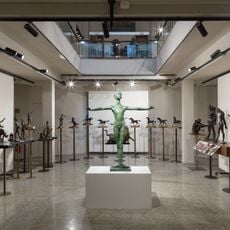
The palace functions today as office space while housing important art collections as part of Italy's national heritage system. Access to the interior may be limited due to its current use as an administrative building.
The courtyard features unusual overturned brackets that once held rich ornamental decorations and contribute to the vertical character of the design. These architectural peculiarities often go unnoticed by casual visitors.
The community of curious travelers
AroundUs brings together thousands of curated places, local tips, and hidden gems, enriched daily by 93,140 contributors worldwide.