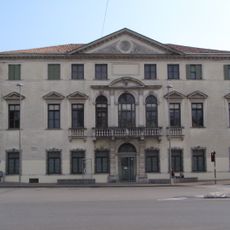
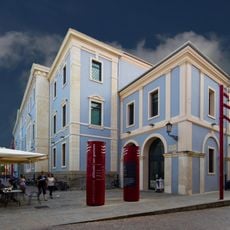
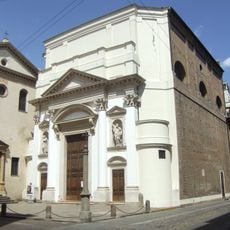
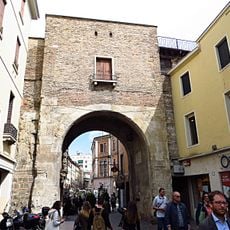
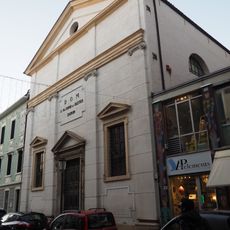
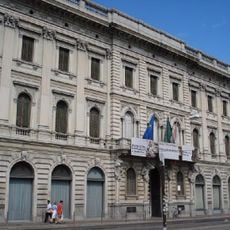
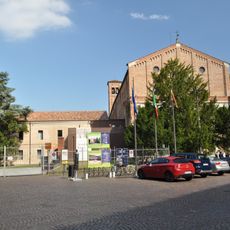
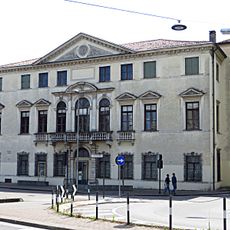
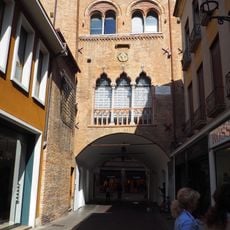
Palazzo Zuckermann, History museum in Corso Garibaldi, Padua, Italy.
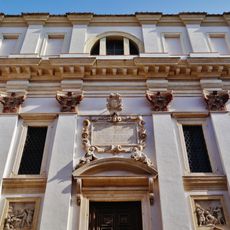
Palazzo Zuckermann is a three-story building in Padua containing two museums with collections of decorative arts, paintings, and historical objects. The spaces display glassware, textiles, furniture, ceramics, and one of Europe's largest coin collections.
The building was constructed between 1912 and 1914 by architect Filippo Arosio and initially functioned as the city's main post office. Following its role as an administrative center, it was transformed into a museum.
The palace is named after Enrico Zuckermann, owner of the metal-smallware firm Zedapa, who applied to build it in 1912. The Museo Bottacin holds the collection donated in 1865 by Nicola Bottacin, a Trieste merchant and numismatist; among the works is Canova's bust of Doge Paolo Renier.
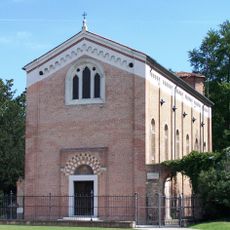
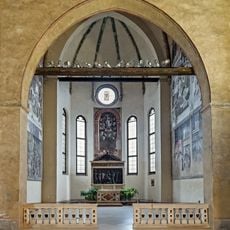
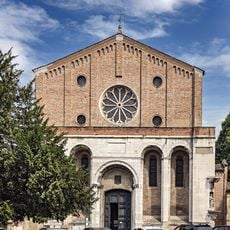
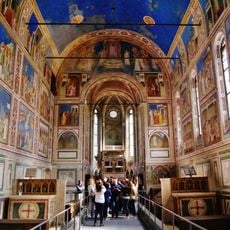
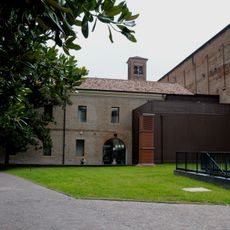
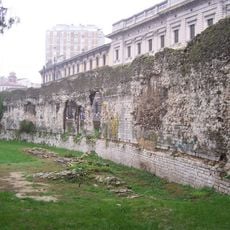
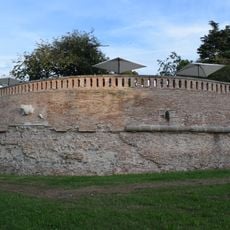
The palace stands at Corso Garibaldi 33, next to the central post office and across from the Scrovegni Chapel and the Eremitani Museum. The ground-floor entrance leads to a courtyard with remains of the old city walls. A Carrara marble staircase lit by a skylight and a three-arched window goes up to the first floor.
The attic, now a storeroom, keeps wall paintings of sporting scenes made by a group of United States soldiers. In the immediate post-war years the American army used these rooms as a gym and set up a radio station on the building's terrace.
The community of curious travelers
AroundUs brings together thousands of curated places, local tips, and hidden gems, enriched daily by 93,112 contributors worldwide.