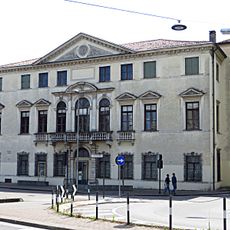
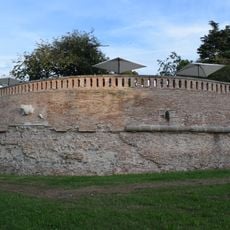
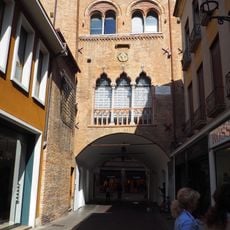
Porte Contarine, Hydraulic structure in Padua, Italy.
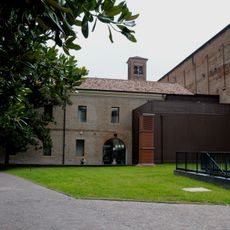
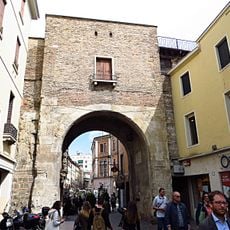
Porte Contarine is a water control structure in Padua that manages flow between the Naviglio Interno canal and the Piovego waterway. The system uses a basin and gate mechanism to balance water levels between these two connected waterways.
The lock was built in 1526 by the Republic of Venice to ease navigation past a 2.5-metre drop in the Naviglio Interno before it met the Piovego, probably on an earlier weir of 1282. Its two adjacent gates, though not the originals, can still be seen. It let heavy cargo boats such as peate and burci pass until the canal was covered over.
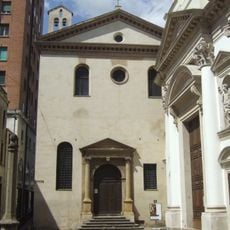
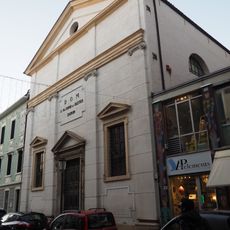
The small church of Santa Maria ad Porta Contarenans stands beside the basin, though the source does not date it to 1723. The complex's name comes from the Contarini family, and the basin's two adjacent gates, not the originals, can still be seen. Today the Amissi del Piovego association promotes the old Venetian rowing style along these waters.
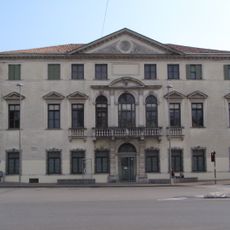
The structure sits on Via Giacomo Matteotti and gives you a clear view of how the city's water system works. From here you can easily understand the connection between downtown Padua and the canals that lead toward Venice's lagoon.
In the early 1900s, the water level difference in the basin was used to generate electricity that powered Padua's first street lights. This was one of the city's early experiments in using water flow to produce energy for modern needs.
The community of curious travelers
AroundUs brings together thousands of curated places, local tips, and hidden gems, enriched daily by 93,572 contributors worldwide.