Church of the Eremitani, Gothic church in Padua, Italy
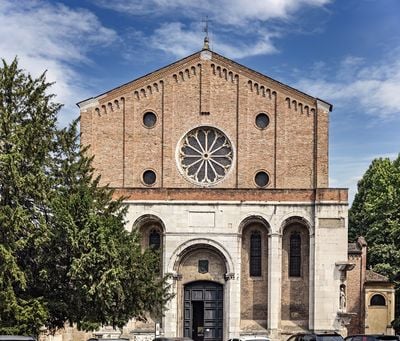
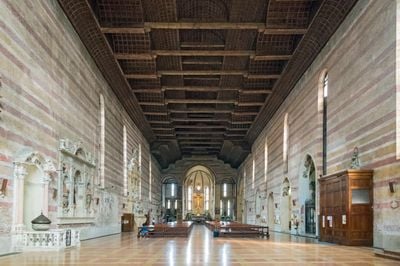
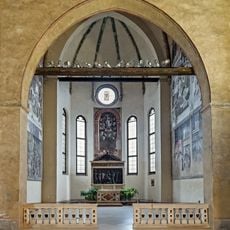
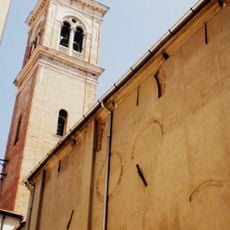
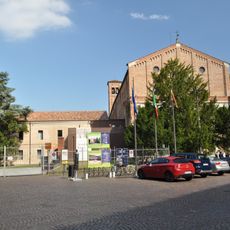
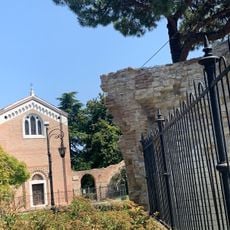
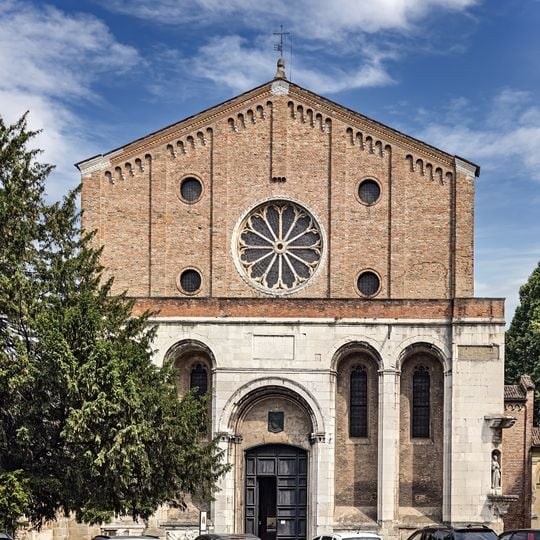
The Church of the Eremitani is a single-nave Gothic church with a tall gabled brick facade, a central rose window and a lower band of pale stone with three arched portals. Inside, the flat coffered wooden ceiling rests on thick beams above walls banded in pale stone and red brick, ending in a rounded apse.
This church was founded in 1276 for the Order of Augustinian Hermits and served as an important religious center for the order over the centuries. During World War II, it suffered severe bombing damage in 1944 and was later rebuilt.
The Ovetari Chapel held Mantegna's frescoes of Saints James and Christopher, painted 1448-1457; Allied bombing on 11 March 1944 destroyed most of them, leaving over 88,000 fragments from 77 square metres. Elsewhere Guariento and Ansuino da Forlì painted, and around 1370 Giusto de' Menabuoi depicted the Glory of Saint Augustine with the Virtues and Liberal Arts in the Cortellieri chapel.
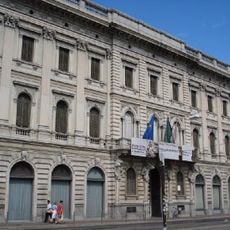
The building sits on Piazza Eremitani near the Civic Museums and is easily reached during normal visiting hours. The location is walkable and sits in a quiet section of the old city.
The two Carrara tombs by Andriolo de Santi were moved here from the razed church of Sant'Agostino in 1819. The older one, for Ubertino da Carrara, dates to about 1345; Jacopo II's followed in 1351, with the central Madonnas attributed to Bonino da Campione.
The community of curious travelers
AroundUs brings together thousands of curated places, local tips, and hidden gems, enriched daily by 92,632 contributors worldwide.