Scrovegni Chapel, Gothic chapel in Padua, Italy
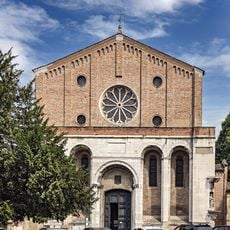
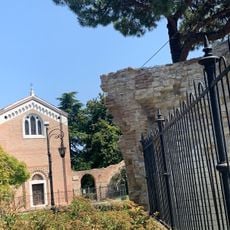
The Scrovegni Chapel, also called the Arena Chapel, is a small Gothic church in Padua, now part of the Musei Civici complex. Its brick facade has a steep gable topped by a cross, a three-part arched window with a quatrefoil, and an arched doorway framed by a semicircular brick and stone pattern. The nave measures 20.88 m long, 8.41 m wide and 12.65 m high, with a square apse 4.49 m deep and a five-sided section 2.57 m deep.
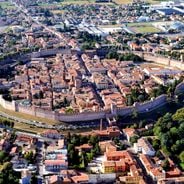
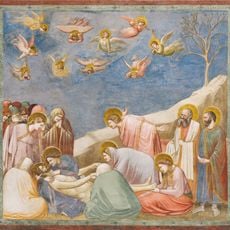
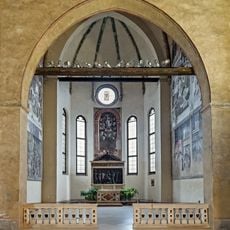
Enrico Scrovegni, a wealthy Paduan banker, bought the site of the old Roman arena from Manfredo Dalesmanini on 6 February 1300 and built a palace there with a private chapel and family tomb. Giotto painted the interior between 25 March 1303, when the chapel was first consecrated, and 25 March 1305, when it was consecrated definitively. In January 1305 the Eremitani friars protested that the chapel was becoming a full church with a bell tower; the monumental apse and wide transept were probably demolished, and frescoes added after 1320 mark the rebuilt apse.
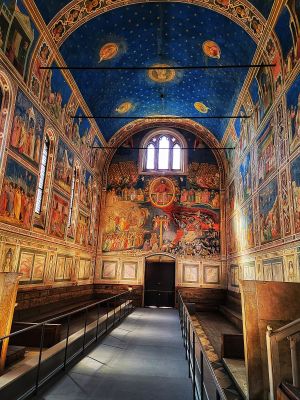
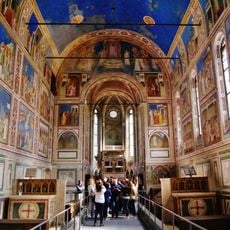
The chapel bears the name of the family who lived in this part of Padua during the 14th century and funded its construction. Visitors today enter a space completely covered in wall paintings that is still used as a place of worship.
Reservations are required to limit the number of people inside at once and to control humidity levels. Visitors pass through a climate chamber before entering, which takes about 15 minutes.
The western wall features a large fresco of the Last Judgment that covers the entire surface. The patron himself appears in it, holding a model of the chapel in his hands and offering it to the Virgin Mary.
The community of curious travelers
AroundUs brings together thousands of curated places, local tips, and hidden gems, enriched daily by 92,263 contributors worldwide.