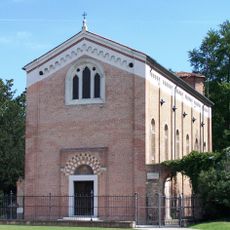
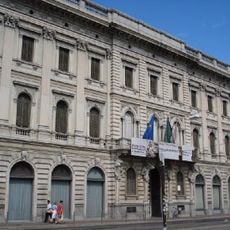
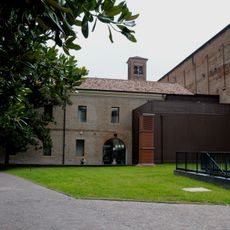
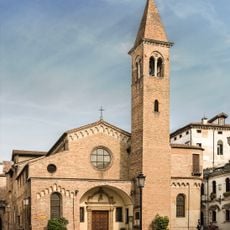
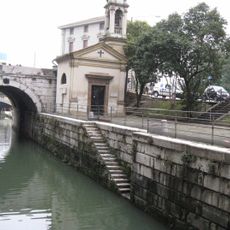
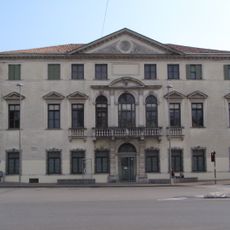
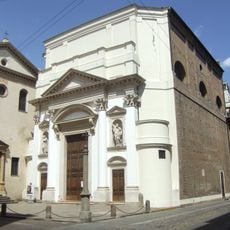
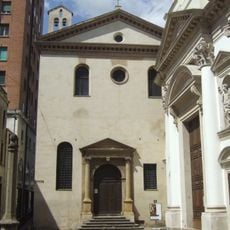
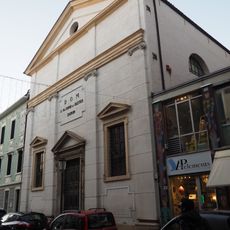
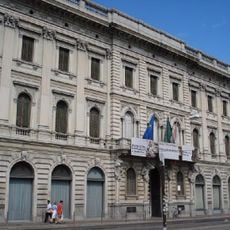
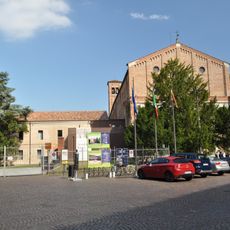
Scuola del Carmine, Gothic oratory in Padua, Italy.
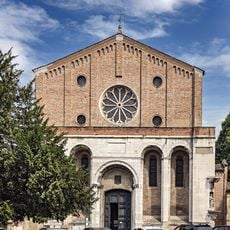
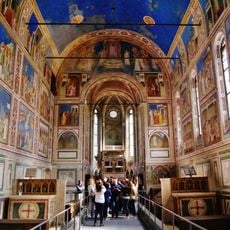
Scuola del Carmine is a single-hall oratory facing the forecourt of the Basilica del Carmine in Padua, entered through two 17th-century portals. Its one nave ends to the east in a presbytery marked by three arches on columns. The walls carry frescoes of the life of Mary by Giulio and Domenico Campagnola, Girolamo Tessari and Stefano dall'Arzare, and the 1739 altar by Andrea Torreselle holds a Madonna and Child by Tessari.
The Confraternita della Beata Vergine del Carmelo arose around 1330 from an earlier Carmelite apostolate, probably based in a chapel of the basilica. In 1367 Guglielmo del Sale obtained for the brotherhood the rooms above the convent refectory, used as a school until 1492, when the friars took them back and moved their refectory there. The confraternity kept the old refectory and began adaptation works; fresco decoration started in 1505 or 1507 with Giulio Campagnola and continued until 1560 with Stefano dall'Arzare.
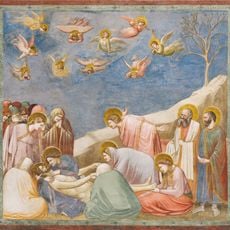
The frescoes show scenes from the life of Mary and were painted by Paduan artists who each brought their own skill to these walls. The quality of their work reflects how important this gathering place was to the people who used it.
Access to this space is limited and available only on specific days. Check ahead for exact visiting hours since it is not open every day.
The altarpiece of the 1739 altar, a Madonna and Child by Girolamo Tessari, was long attributed to Titian. The atrium also keeps traces of a 14th-century fresco decoration covered by later Renaissance painting.
The community of curious travelers
AroundUs brings together thousands of curated places, local tips, and hidden gems, enriched daily by 94,410 contributors worldwide.