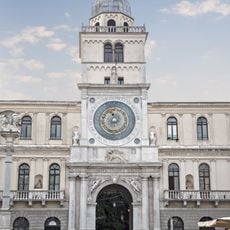
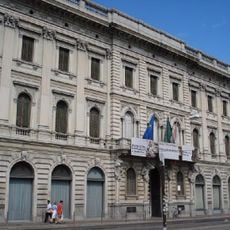
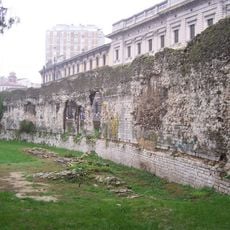
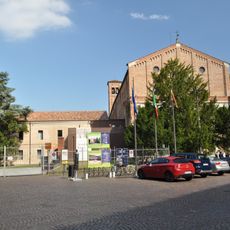
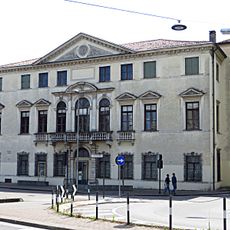
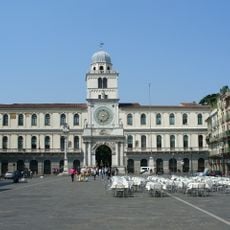
Porta Molino, Medieval city gate in Padua, Italy.
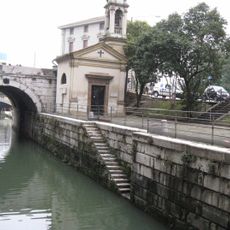
Porta Molino is a medieval city gate in Padua with a rectangular tower rising above the arched entrance. The structure displays thick defensive walls and architectural elements from different periods that shaped its form.
Porta Molino was erected in stone and brick in the early 13th century as one of the main gates (the regales cited by Giovanni da Nono) of Padua's communal walls, linked to the Roman Ponte Molino built between 40 and 30 BC. Its name and the bridge's come from the 33 or 34 water mills fed by the Tronco Maestro branch of the Bacchiglione, definitively suppressed in 1883-1884.
The gate and bridge take their name from the 33 or 34 water mills mounted on boats in the Tronco Maestro branch of the Bacchiglione, which were removed in 1883-1884. A plaque by Carlo Leoni credits Galileo with using the gate as an observatory, a claim now considered false.
The gate sits near the Bacchiglione River and marks a natural entry point to the city center. It is easily reached on foot from the Botanical Garden and stands in an area with other historic buildings nearby.
The upper floors served as a water reservoir in the late 1800s for one of the city's first drinking water systems. This practical use of the old structure shows how people adapted the building to meet new needs.
The community of curious travelers
AroundUs brings together thousands of curated places, local tips, and hidden gems, enriched daily by 93,971 contributors worldwide.