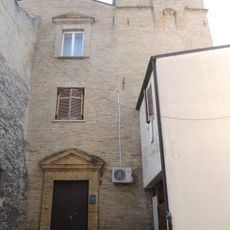
Palazzo d'Avalos, Renaissance palace in Vasto, Italy.
Palazzo d'Avalos in Vasto is a monumental building whose walls, height and number of storeys match the original structure, though the sea-facing side was altered over the centuries. The first mention comes from a 17th-century chronicle by Nicola Alfonso Viti, citing condottiero Giacomo Caldora, lord of Vasto, who compensated the Augustinian friars for using part of their garden and stayed in the building. Flavio Biondo described it as "superbissimo" in the 15th century.
The structure was built on the foundations of a 15th-century Benedictine monastery and underwent major renovations in 1552 under Francesco Ferdinando, the second Marquis of Vasto. These transformations established the palace's current appearance and architectural character.
The palace was the residence of the Marquises of Vasto until 1806. Its name comes from the d'Avalos family, who acquired Vasto in 1496 after the Caldora and de Guevara lordships. A 17th-century chronicler, Nicola Alfonso Viti, records the earliest mention of the building in an act concerning Giacomo Caldora.
The palace is located in Vasto's historic center at Piazza Lucio Pudente and is easy to reach on foot. Guided tours are available to help visitors explore the different museums and sections throughout the building.
The first documented mention of the palace comes from a 17th-century chronicle by Nicola Alfonso Viti, who records the condottiero Giacomo Caldora compensating the Augustinian friars for using part of their vegetable garden and staying in the building. The 15th-century humanist Flavio Biondo called the palace "superbissimo", though no image of that original structure survives.
The community of curious travelers
AroundUs brings together thousands of curated places, local tips, and hidden gems, enriched daily by 94,530 contributors worldwide.