Palazzo del Governo, Government palace in Ascoli Piceno, Italy
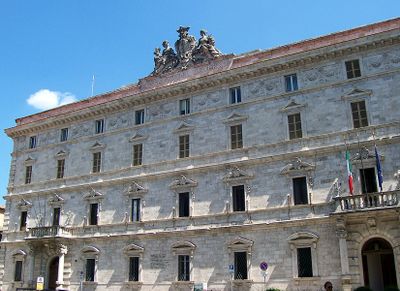
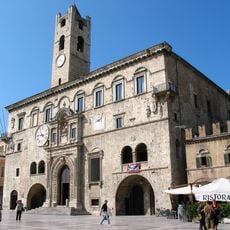
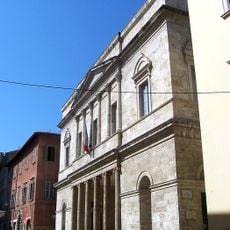
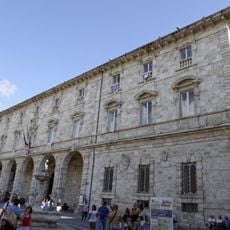
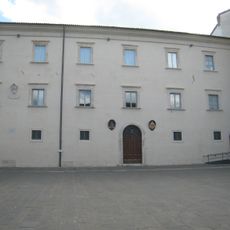
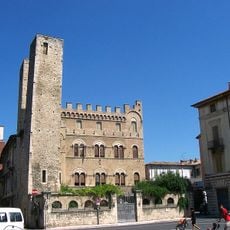
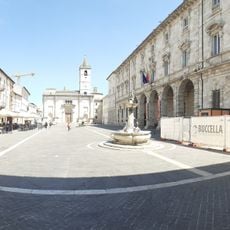
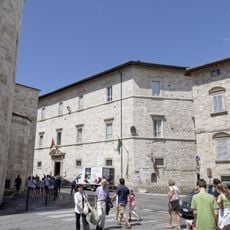
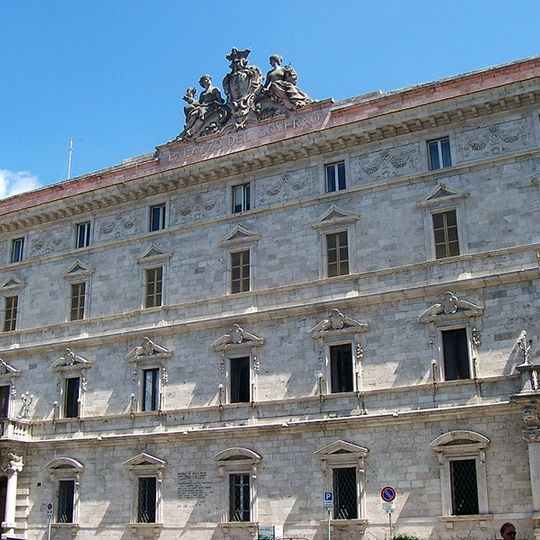
Palazzo del Governo, also called Palazzo San Filippo, occupies the entire east side of Piazza Fausto Simonetti. It is built of squared travertine blocks and combines a rear former Filippini convent with a front facade of two entrances and four rows of windows, raised in 1902–1904. The crowning sculpture group by Romolo del Gobbo depicts the Tronto and Castellano rivers.
Work on the building began in the early 1700s and ran until 1797, when only part of the exterior and about half of the interiors were finished. In 1902 the small Baroque church of San Filippo Neri was demolished to make room for a new main facade, built between 1902 and 1904 to designs by Ugo Cantalamessa and Umberto Pierpaoli. The palazzo later held a court, a barracks and a women's boarding school before becoming the seat of the Prefecture.
The palace is still called Palazzo San Filippo after the 17th-century convent of the Filippini congregation that forms its rear portion. In the provincial council hall on the first floor, Domenico Ferri painted the walls and vault with scenes of the fertility of the Piceno land, views of industrial activity and the course of administrative events.
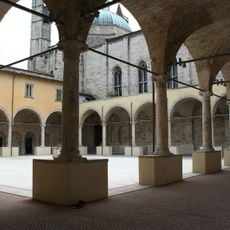
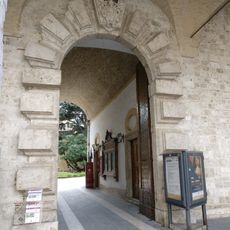
The main front faces Piazza Fausto Simonetti, with a second front on Via Cino del Duca; the two entrances and four rows of windows mark the public facade. The Prefecture and Provincial Administration occupy the interior, so visitors normally view the exterior and courtyards rather than the offices.
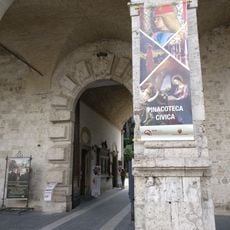
The second-floor festival hall, also called the De Carolis room, measures 13.50 by 8.50 metres and holds what is considered Adolfo De Carolis's chromatic masterpiece, painted in 1907-1908 with tempera dissolved in casein and oil retouches. His preparatory tempera studies on cardboard are kept in the city's civic picture gallery.
The community of curious travelers
AroundUs brings together thousands of curated places, local tips, and hidden gems, enriched daily by 92,893 contributors worldwide.