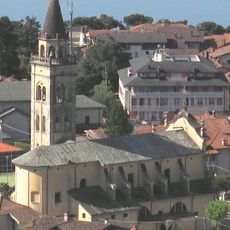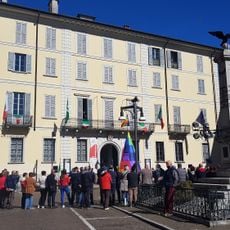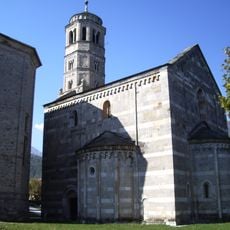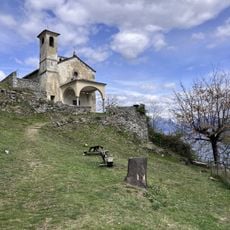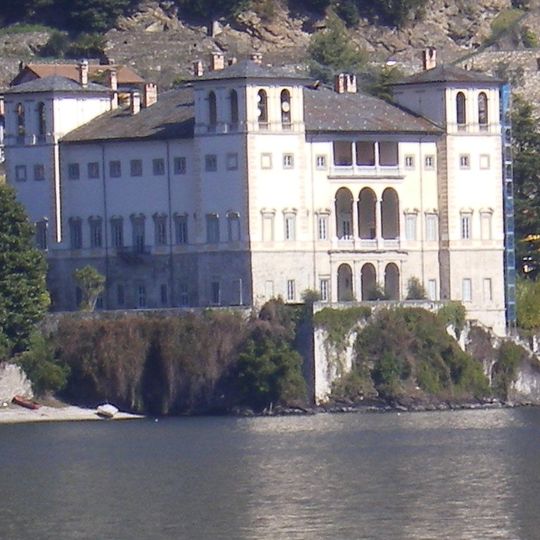
Palazzo Gallio, Cardinal's palace in Gravedona ed Uniti, Italy
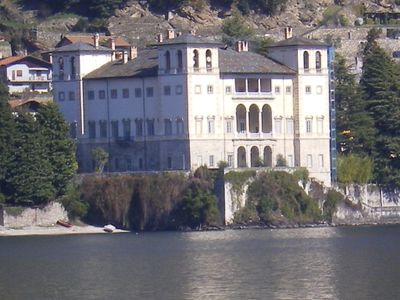
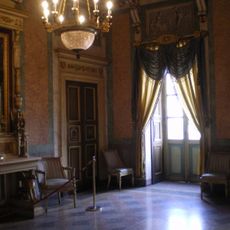
Palazzo Gallio, also known as the Palazzo delle Quattro Torri, is a square block whose four corner towers recall the site's earlier castle, while two open loggias, facing the lake and the hillside, follow the Renaissance villa tradition. Inside, rooms are arranged around a large central hall running the building's full length from the loggias, and a frescoed chapel stands on the first floor.
Cardinal Tolomeo Gallio, who received the Tre Pievi territory as a fief from Philip II between 1579 and 1580, commissioned the palace; the first stone was laid between 1586 and 1587. The design, long wrongly credited to Pellegrino Tibaldi, is more likely by Giovanni Antonio Piotti, while historian Giuseppe Maria Stampa attributes the construction to magister Giacomo Curti of Gravedona. The building was finished after 1607, the year the cardinal died, so he never lived there; remains of a 12th-century fortification were incorporated into the garden walls.
The palace gives its name to the Mostra delle Camelie, held in the building and its garden in the week before Easter, when the many camellia trees of the grounds are shown. The garden itself was already cited in the 1500s for its rare plants, and in the 19th century it was turned from a formal garden into an English-style one.
The building houses public administrative offices and maintains gardens accessible to visitors. You can usually explore the grounds and inner courtyard freely, though some areas may have restrictions due to current use.
The garden walls still contain remains of a 12th-century fortified structure that stood here before the palace. The garden itself was already noted in the 1500s for its rare plants; today it is known for its many camellias, and the week before Easter the palace hosts the Mostra delle Camelie.
The community of curious travelers
AroundUs brings together thousands of curated places, local tips, and hidden gems, enriched daily by 92,944 contributors worldwide.