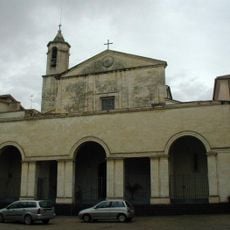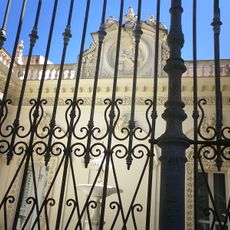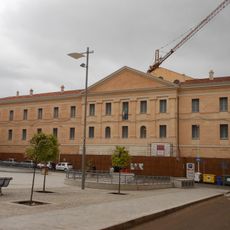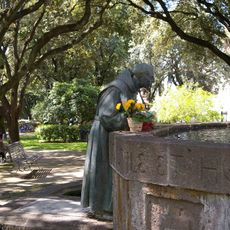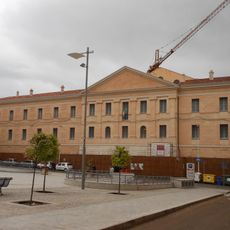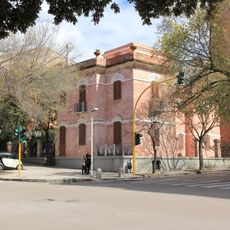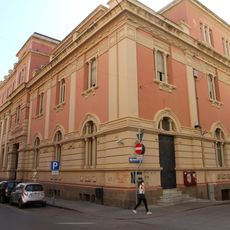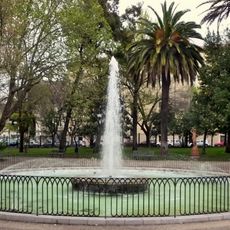
Parco di Monserrato, Public park and Italian national heritage in Sassari, Italy.
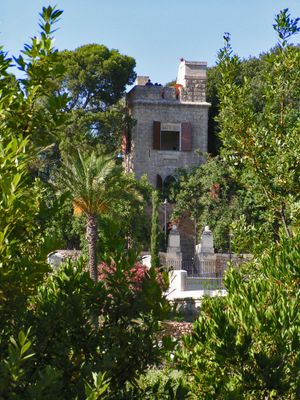
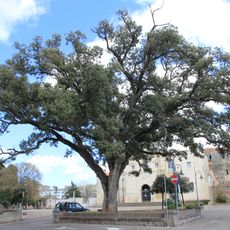
Parco di Monserrato covers about six hectares in a natural basin on the southwestern edge of Sassari. Main avenues cross it, each planted with a different theme: lindens, holm oaks and carob trees, cypresses and pines. At its centre, six cultivation islands separated by small paths hold numerous orange trees.
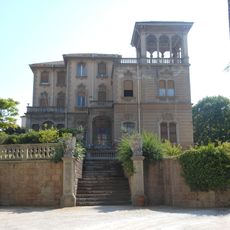
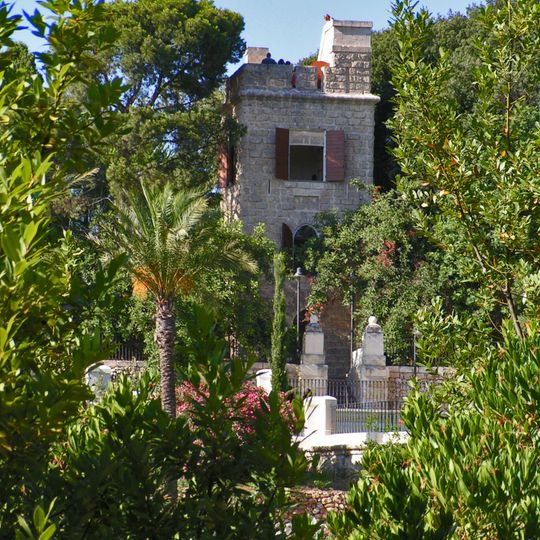
In the 17th century the estate belonged to the Navarro family, Spanish merchants who moved from Valencia to Sardinia. In 1758 it passed by inheritance to the noble Cosimo Deliperi, whose descendant sold it in 1856 to Giommaria Lado; about ten years later it went to Giovanni Antonio Sanna, who enlarged the house and added the Tempietto delle acque and the Ninfeo. After Sanna died in 1875, Baron Giuseppe Giordano Apostoli took over and built neo-Gothic structures such as the Torre di caccia and the Belvedere basin. On 16 February 1921 the Marquis of Suni acquired it, and from the Second World War the park declined until restoration began in the late 1990s.
The park's name comes from the Spanish merchants from Valencia, the Navarro family, who owned the estate in the 17th century. Its avenues are named for their trees: the avenue of limes, that of holm oaks and carob trees, the cypress avenue and the pine avenue. In the centre, six cultivation islands separated by small paths hold orange trees.
The park has flat terrain with wide pathways that lead through the different sections, making it easy to walk around. Parking facilities at the entrance make visiting by car straightforward.
Within the grounds are six cultivation islands planted with orange trees, each connected by small pathways that create botanical zones with distinct plant themes. This separated layout offers visitors surprising transitions when moving between garden areas.
The community of curious travelers
AroundUs brings together thousands of curated places, local tips, and hidden gems, enriched daily by 93,669 contributors worldwide.