Porta Spagnola, City gate in Augusta, Italy
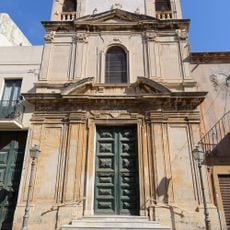
Porta Spagnola is a 17th-century city gate in Augusta, Sicily, the only entrance to the historic centre. It was built across an isthmus that was later excavated, turning the city into an island. The gate is topped by a marble coat of arms with a crown, supported by a lion and a griffin, and only its upper part survives intact after repeated modifications.
Built between 1681 and 1682, the gate was designed by architect Carlos de Grunenbergh as a fortification entrance for Spanish rule over Sicily under King Charles II. The construction reflected the military and political power Spain exercised in this Mediterranean region.
The Latin plaque on the gate records that Viceroy Francesco Benavides, Count of Santo Stefano, judged the fortification of the port of Augusta as a safeguard not only for Sicily but for all Italy and the Christian name. It names King Charles II of Spain as reigning and is dated MDCXXCI, 1681.
The gate is the only entrance into Augusta's historic centre, reached across the excavated isthmus that turned the city into an island. It was damaged by the earthquake of 13 December 1990 and restored in 2005, so the upper section is the part that survived the later modifications.
The gate was built across an isthmus that was later cut through, turning Augusta into an island; two drawbridges were installed at the gate after the cut. A few hundred metres away stood the Porta Madre di Dio, which no longer exists. The gate was damaged by the earthquake of 13 December 1990 and restored in 2005.
The community of curious travelers
AroundUs brings together thousands of curated places, local tips, and hidden gems, enriched daily by 94,546 contributors worldwide.