Riserva naturale orientata Biviere di Gela, Protected coastal lake in Gela, Italy
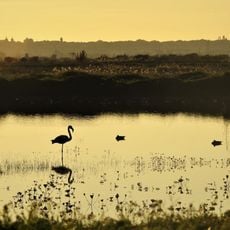
Riserva naturale orientata Biviere di Gela is a shallow coastal lake, a remnant set among the dunes of the Gulf of Gela about 1.5 km from the sea, which once largely fed it. The lake lies entirely within the municipality of Gela and is fringed by reed beds of Phragmites australis and Scirpus species.
Pliny the Elder recorded the lake as Cocanico, where salt was dried along its shores. Until the 16th century the area was a brackish marsh; in the early 17th century Duke Giovanni di Aragona turned it into a freshwater lake by linking it underground to the Dirillo river. It was a hunting and fishing reserve until the mid-20th century, became a Ramsar wetland in 1991 and a regional nature reserve in 1997.
The glossy ibis, called Mignattaio in Italian, is the reserve's symbol. The marsh also shelters night herons and bitterns, which are harder to see because they are active at dusk and dawn. The reserve's visitor centre and observation huts were funded by the European Community.
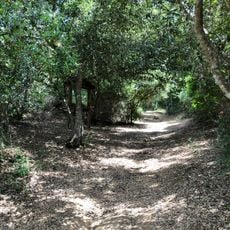
The reserve has a car park at the entrance, a visitor centre, equipped areas, trails and observation hides, built with European Community funding. The lake lies about 1.5 km from the sea, entirely within Gela's territory. The Mignattaio, or glossy ibis, is the reserve's symbol and a bird to watch for.
The glossy ibis (Plegadis falcinellus) is the reserve's symbol, and the rare ferruginous duck (Aythya nyroca), one of Italy's four most threatened species, has been recorded here sporadically. More than 200 bird species use the lake, and the night heron (Nycticorax nycticorax) is nocturnal, so it is harder to spot by day.
The community of curious travelers
AroundUs brings together thousands of curated places, local tips, and hidden gems, enriched daily by 92,789 contributors worldwide.