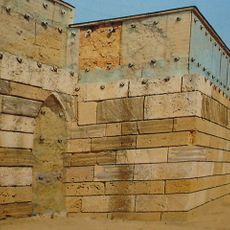
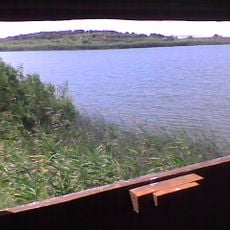
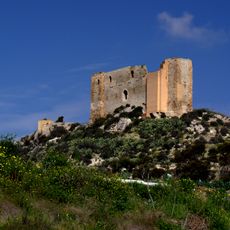
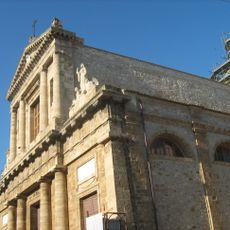
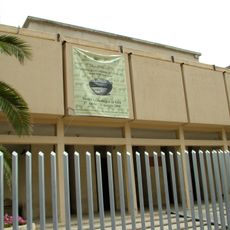
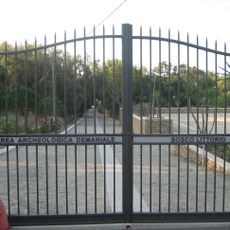
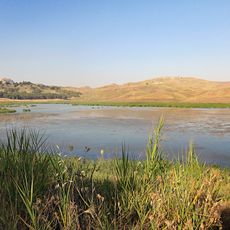
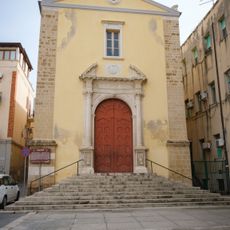
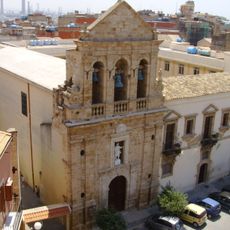
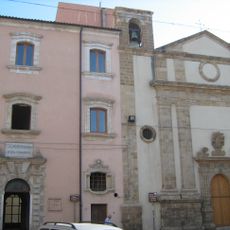
Gela acropolis, Ancient Greek archaeological site in Gela, Italy.
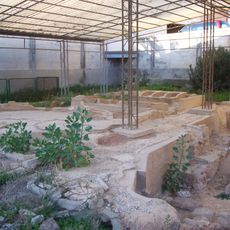
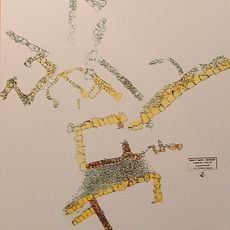
The Gela acropolis, also called Molino a Vento hill, is the hill where ancient Gela stood. It preserves remains of Archaic buildings, Greek temples and prehistoric tombs. The Greek colony was laid out with a main east-west street, the plateia, and narrow cross-streets, stenopoi, forming blocks about 30.5 m wide separated by 4 m streets. Temple B, the Athenaion, measured 35.22 x 17.75 m; Temple C, of which one column remains, 51.30 x 21.70 m.
Rhodian and Cretan colonists led by Antiphemus and Entimus founded Gela in 688 BC on this hill, building the first sacella; Temple A, dedicated to Athena Lindia, was found by Paolo Orsi beneath Temple B. Temple B, a Doric peripteros of 35.22 x 17.75 m, was built in the first half of the 6th century BC. Temple C, erected after the 480 BC victory at Himera, was damaged in 405 BC and later quarried; the site was abandoned in 282 BC after Phintias of Agrigento destroyed the city.
The acropolis preserves the memory of the Rhodian and Cretan settlers led by Antiphemus and Entimus, who founded the colony in 688 BC. The temples were dedicated to Athena Lindia, and the terracotta decorations of Temple B were so refined that Geloan craftsmen were later commissioned to adorn the treasury of Olympia.
The site sits mostly in the open with little shade, so sun protection and water are essential when visiting. Information panels throughout the grounds explain the different ruins and their original purposes.
The terracotta roof decorations of Temple B, including gorgon masks and acroteria of horsemen and lions, were made by Geloan craftsmen who also adorned the treasury of the Geloans at Olympia. This export of a local decorative style to Greece is often overlooked by visitors.
The community of curious travelers
AroundUs brings together thousands of curated places, local tips, and hidden gems, enriched daily by 93,849 contributors worldwide.