San Costantino, Religious shrine in Sedilo, Italy.
San Costantino is a rural shrine on Monte Isei in Sedilo, with a church of red trachyte rising above a walled courtyard called sa corte. The church has a curved facade, a small bell gable, and a portal topped by a tympanum; inside, the presbytery and sacristy retain 15th-century walls, while the nave was rebuilt in the 18th century.
The present church was built around the 16th century in Catalan Gothic style on a 6th-century structure dedicated to the same saint, probably erected by Basilian monks from the old centre of Nordai and abandoned in the 15th century. The eagle of Charles V's coat of arms is carved on a rib corbel by the sacristy door. Heavily rebuilt in the second half of the 18th century, it was finished in 1789, as inscriptions on the facade and on the second right pillar record.
Inside the walled enclosure called sa corte, the Ardia horse race is run each July in honour of San Costantino, emperor from 306 to 337 and author of the 313 Edict of Milan. Riders start from the church and circle sa muredda, the low circular wall with a white marble column and cross at its centre. The muristenes, reed-roofed porticoes along the perimeter wall, once lodged pilgrims and still shelter visitors during the festival.
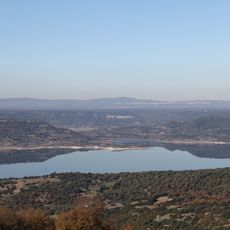
The shrine is accessible via a hiking trail that passes through Mediterranean terrain and connects to surrounding natural areas. The location can be exposed during warm weather, so it helps to be prepared with appropriate gear and water.
The two entrances to the walled courtyard, sa corte, are called portale de ferru and portale de linna: the first is closed by an iron gate, the second was originally a wooden gate before being rebuilt in red trachyte. The main arch carries a Latin inscription to Saint Constantine and a cross, the sign said to have appeared to him before the Battle of the Milvian Bridge.
The community of curious travelers
AroundUs brings together thousands of curated places, local tips, and hidden gems, enriched daily by 94,223 contributors worldwide.