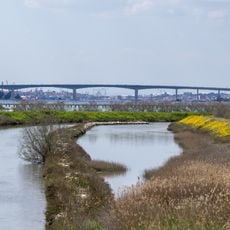
Saturo, Archaeological site in Leporano, Italy.
Saturo is an archaeological site on the Ionian coast of southern Italy that reveals remains from multiple ancient periods of settlement. The area between Porto Perone and Porto Saturo contains foundations of houses, temples, and workshops arranged across the landscape in layers that show how communities changed over time.
The acropolis hill was occupied from the 18th century BC, in the Early Bronze Age, by a community with Aegean ties; hut floors of pottery fragments and imported Peloponnesian goods attest to it. After a gap in the 15th–14th centuries BC, a proto-urban village with sub-circular huts rose in the 13th century BC, ringed by a dry-stone wall three metres high and five metres wide, with a ditch outside. From the 11th century BC the Iron Age Iapygian culture appears, until Greek colonists founded Taranto.
The site served as a meeting point for different civilizations traveling the Ionian coast, and this cultural exchange left marks in the buildings and objects people left behind. Visitors walking through can observe how various groups adapted to life in this Mediterranean location over time.
The site is open to walk through, but the ground is uneven and partly overgrown, so sturdy shoes and careful footing are important. There is little shade available, so bring sun protection and water, especially during warm months.
The acropolis hill holds traces of huts with irregular stone walls and floors of layered potsherds mixed with clay, built by a community trading across the Ionian Sea with the Peloponnese in the 18th–17th centuries BC. Later, around the 13th century BC, the village was ringed by a dry-stone wall three metres high and five metres wide at its base.
The community of curious travelers
AroundUs brings together thousands of curated places, local tips, and hidden gems, enriched daily by 93,605 contributors worldwide.