Saline di Augusta, Nature reserve near Augusta, Italy.
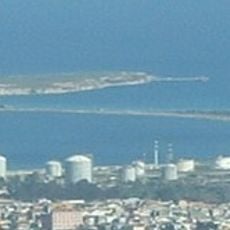
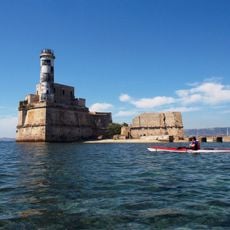
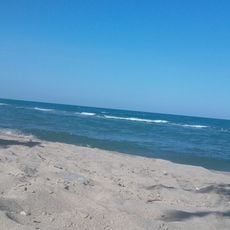
Saline di Augusta is a protected wetland covering about 230 hectares of salt pans along eastern Sicily's coast, where salt-tolerant plants like reeds and glasswort flourish. The landscape consists of shallow water basins alternating with raised areas that together form a complex habitat for numerous bird and aquatic species.
The salt pans are documented at least as far back as the 16th century, when Tommaso Fazello wrote about them. In the late 1860s the Catania-Siracusa railway, opened on 19 January 1871, cut the basins in two. Salt harvesting remained a substantial local resource until the petrochemical complex was built and the pans were closed.
Salt production shapes how locals relate to this land, connecting generations through traditional harvesting methods that have remained largely unchanged. The wetlands serve as a gathering place for bird watchers and researchers drawn to the seasonal movements of migratory species.
The best observations happen in early morning and late afternoon hours when birds are most active and light conditions favor viewing. Visitors should bring sturdy footwear and binoculars, and remain flexible with timing as water levels and accessibility vary by season.
The Catania–Syracuse railway, opened on 19 January 1871, cut the salt pans in two, and the two halves have stayed separated since. Salt was harvested here until the nearby petrochemical complex was built and the pans were abandoned. In 2005 the site was listed by Sicily's special office for areas at high environmental risk, and by 2019 it had still not been cleaned up.
The community of curious travelers
AroundUs brings together thousands of curated places, local tips, and hidden gems, enriched daily by 94,476 contributors worldwide.