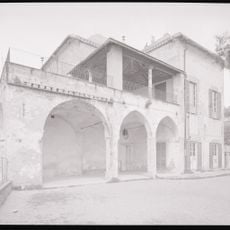
Villa Spinola di San Pietro, villa in Genoa, Italy
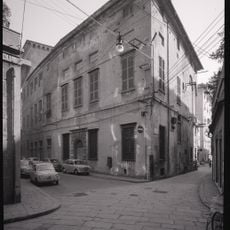
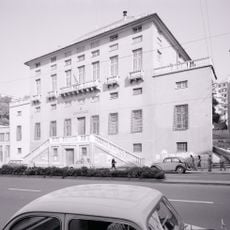
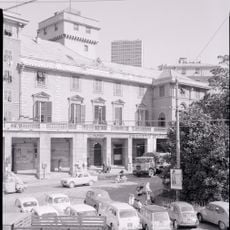
Villa Spinola di San Pietro is a patrician villa in Sampierdarena, Genoa, built to the Alessi model, though its architect is unknown. It appears as palace "C" in Rubens's Palazzi di Genova, alongside "La Fortezza". The 1622-1625 remodelling closed the ground-floor and second-floor loggias and opened new windows, and a floor was later added. Its main facade is now largely hidden by an apartment block, so the entrance was moved to the uphill side.
Giovanni Battista Lercari, doge of Genoa from 1563 to 1565, had the villa built in the second half of the 16th century and funded its frescoes; work stopped after his eldest son died. His nephew Giovanni Battista Spinola, who bought the ducal title of San Pietro in Galatina in 1616, inherited it and remodelled it between 1622 and 1625, closing the loggias and opening new windows. The Spinola heirs held it until the 19th century, when it passed to religious institutes; Sampierdarena bought it in 1920 for use as a school, and in 1926 it joined the Genoa municipality.
The villa's name links two Genoese families: the Lercari, who built it in the second half of the 16th century, and the Spinola, into whose hands it passed by inheritance. Giovanni Battista Spinola, brother-in-law of the commander Ambrogio Spinola painted by Velázquez at Breda, had it remodelled between 1622 and 1625. Since 1920 the building has housed a school, today the Liceo Piero Gobetti.
The villa stands in Sampierdarena, now surrounded by apartment blocks; the entrance was moved to the uphill facade because a residential building blocks the view of the main front. It is the seat of the Piero Gobetti state high school, so access to the interior follows school activity rather than regular tourist opening.
The villa is one of two Sampierdarena palaces described by Peter Paul Rubens in his 1622 volume Palazzi di Genova, where it appears as palace "C"; the other is called "La Fortezza". Rubens's engravings show the wide ground-floor and second-floor loggias that tied the building to its park, loggias later closed in the 1622-1625 remodelling.
The community of curious travelers
AroundUs brings together thousands of curated places, local tips, and hidden gems, enriched daily by 94,661 contributors worldwide.